Terraspect: due diligence for energy investment in emerging markets
Terraspect invests in energy projects across emerging markets, much of it in African countries, where deals stall on diligence rather than on capital. We built the platform that assembles a counterparty's financial, regulatory, technical and ESG picture in one place, then the automation layer that runs the workflows around it. The engagement ran with a founder who was usually in the field and out of reach, so we made most of the product calls ourselves.
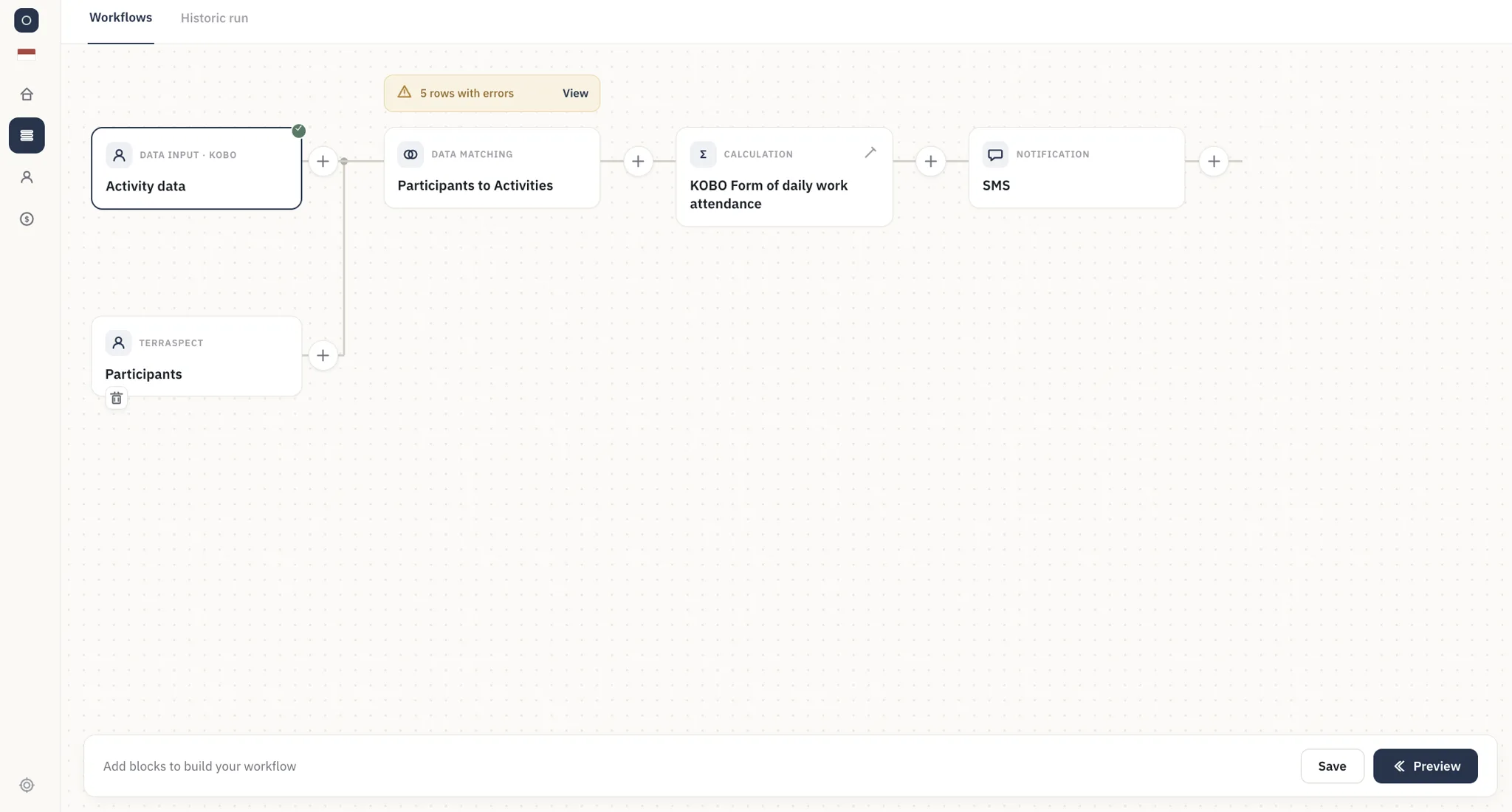
A node graph chains activity-data input, participant matching, calculation and SMS into one automated workflow.
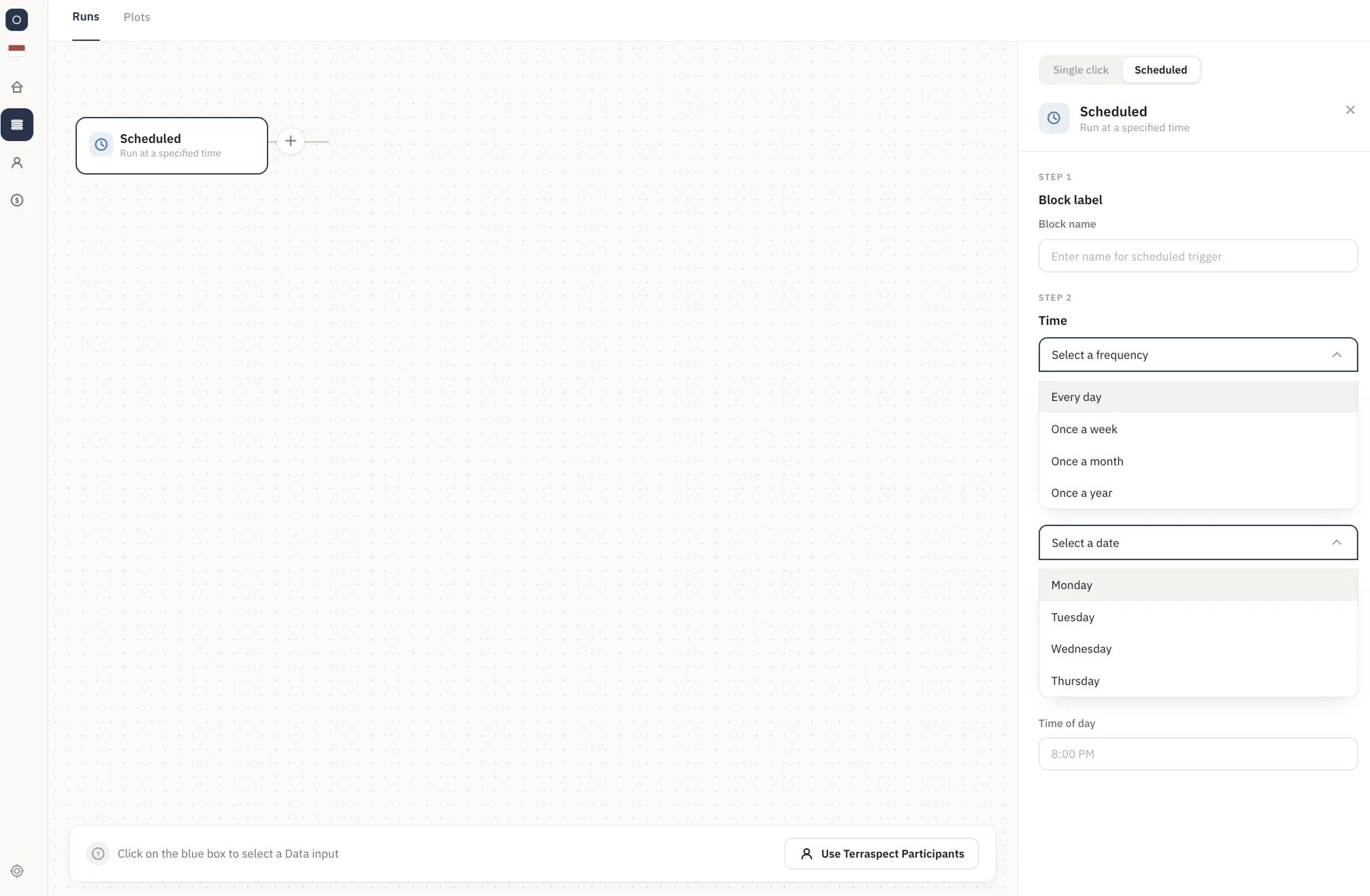
The sidebar configures a scheduled trigger with frequency, day and time settings for when the workflow should run.
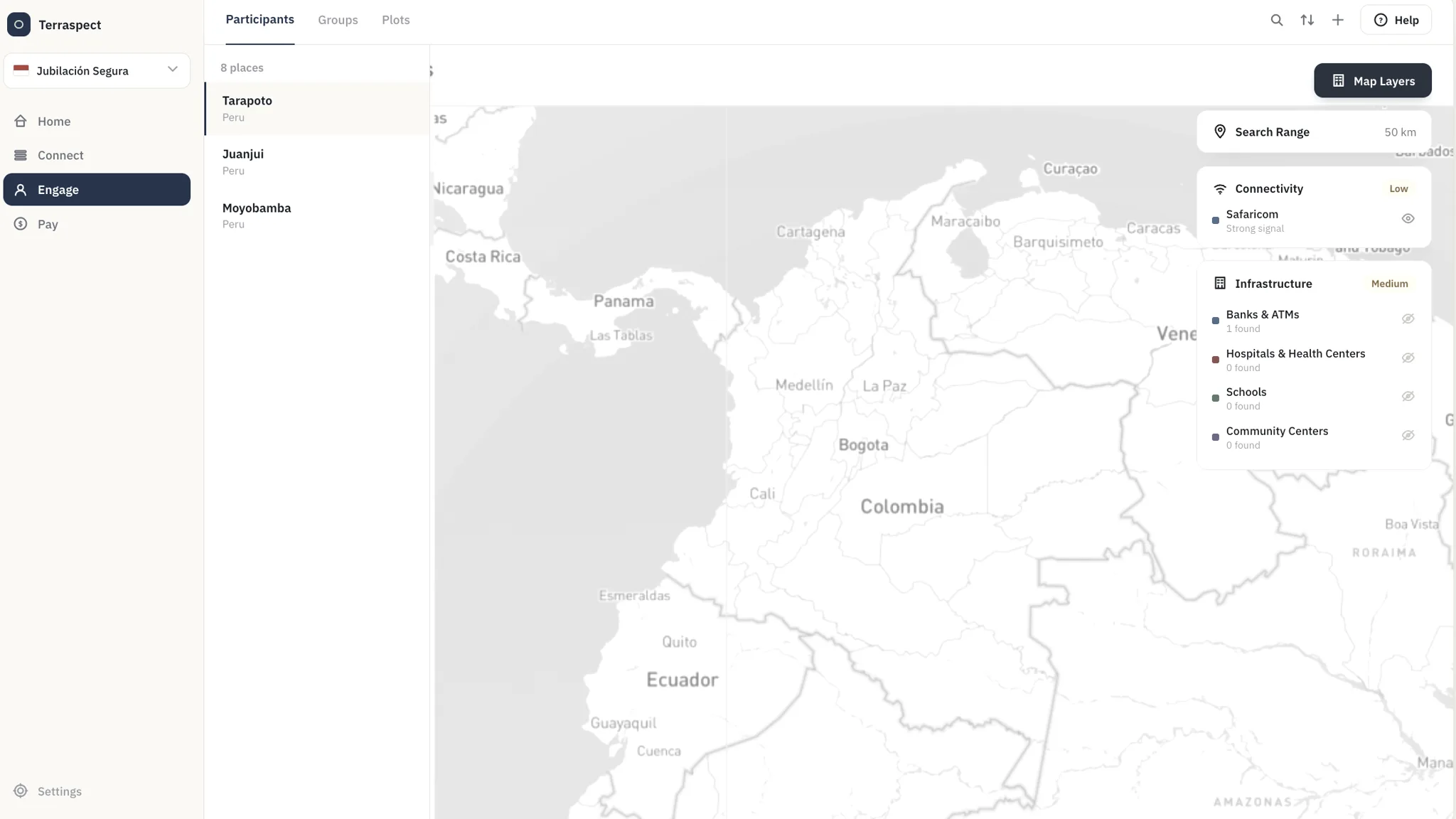
A map plots locations with connectivity and infrastructure layers toggled on, for a geographic read of coverage.
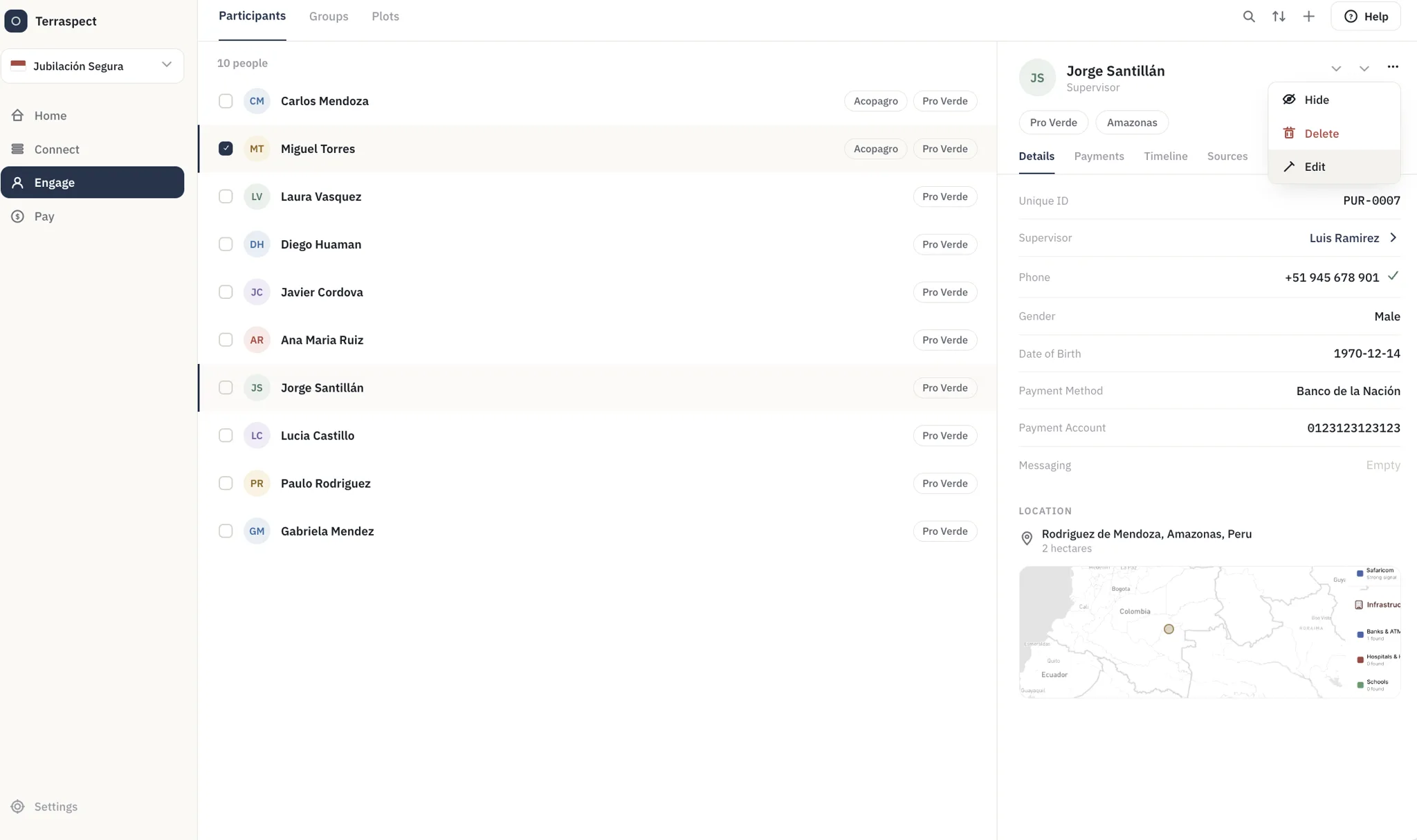
Each participant record holds details, payments, a timeline, data sources and location in one registry view.
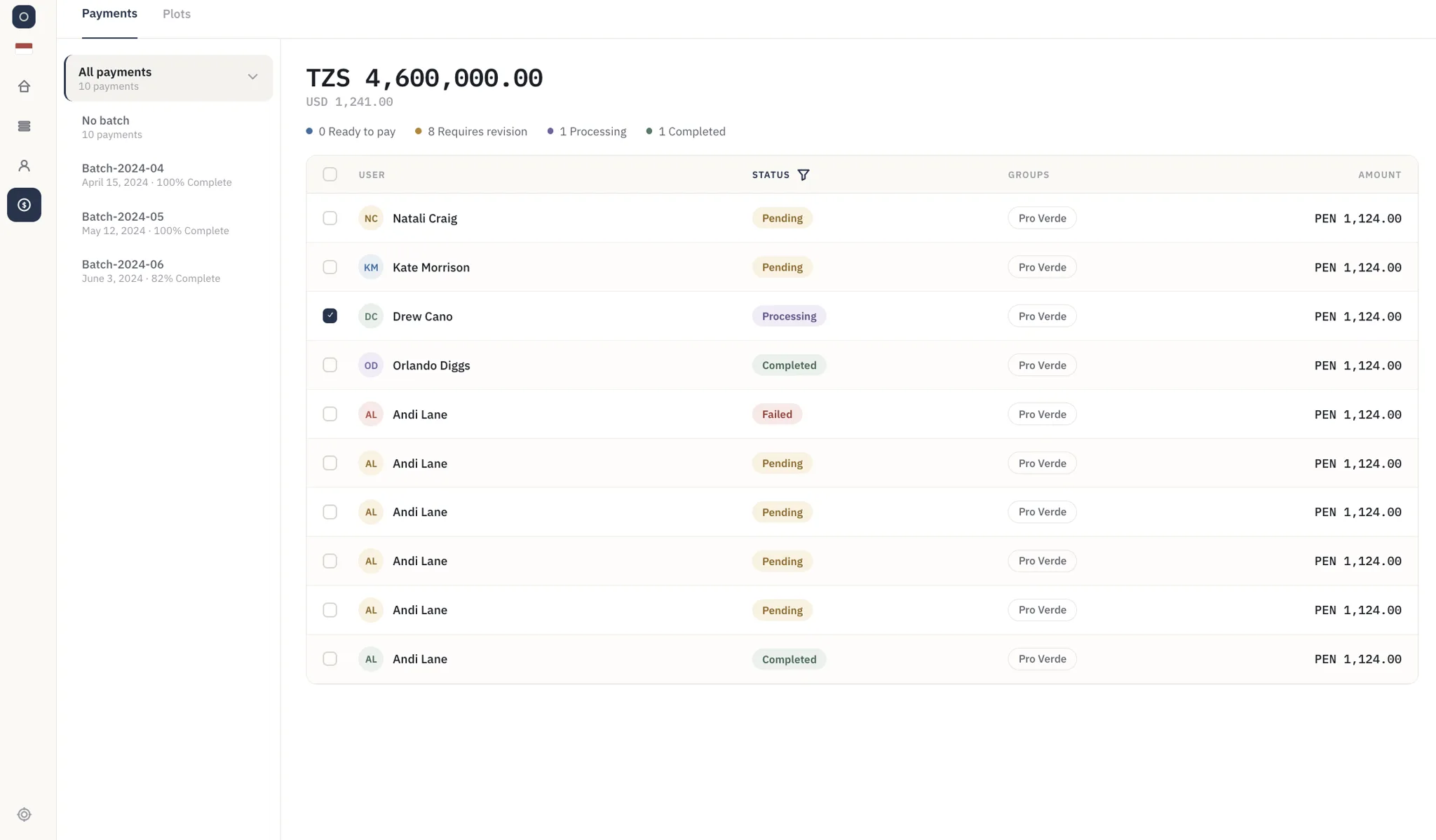
Payments lists batches with status and totals, so an operator can track what has been sent and what is pending.
- Energy investment and project finance, emerging markets
- Embedded delivery team, engineers plus a client-facing lead, two build cycles
- React and TypeScript on Vite, with a heavy data visualisation layer of grids, charts, maps and a node-graph workflow builder
Screening a counterparty in these markets means assembling credit, regulatory, permitting, technical and ESG risk from scattered sources, and that assembly is exactly where deals die. Their own framing of what they were selling was closing more bankable deals, faster and derisked.
We built the place that picture gets assembled: financial indicators, risk breakdowns, views onto the teams behind each project, and a map, structured so an investor or a developer sees a project whole rather than in fragments. The engagement ran on unusual terms, because the founder spent much of it on field trips in Tanzania and elsewhere and was often unreachable. He recorded a short video from a hotel once a day, and we worked from that. It put us closer to co-owners of the product than to a ticket queue, deciding how his ideas should actually be built.
The second round came out of the first one's success. The product had accumulated enough surface that it worked against its users, with too many tabs and important actions buried where nobody found them, so rather than reorganise the navigation we established with the client that people did not want to visit the screen at all. We built an automation layer in the spirit of Zapier, where a flow is configured once and then runs, and that was the last thing we shipped before the engagement wound down.
The platform put a 24-hour turnaround in place of weeks of manual diligence. The client described it as cutting a multi-week review across multiple data rooms down to a matter of days.
Both cycles shipped. The engagement closed with the automation layer live in the product and the client running it themselves.