Synthesys: scaling an early generative AI platform past one product
Synthesys was an early bet on generative AI, made while most of the market was still watching. What they had when we came in was a platform that turned text into avatar videos. What they needed was to stay ahead of a field redrawing itself every few months, with a non-technical client side, which meant reading that field and proposing what to do about it became part of our job.
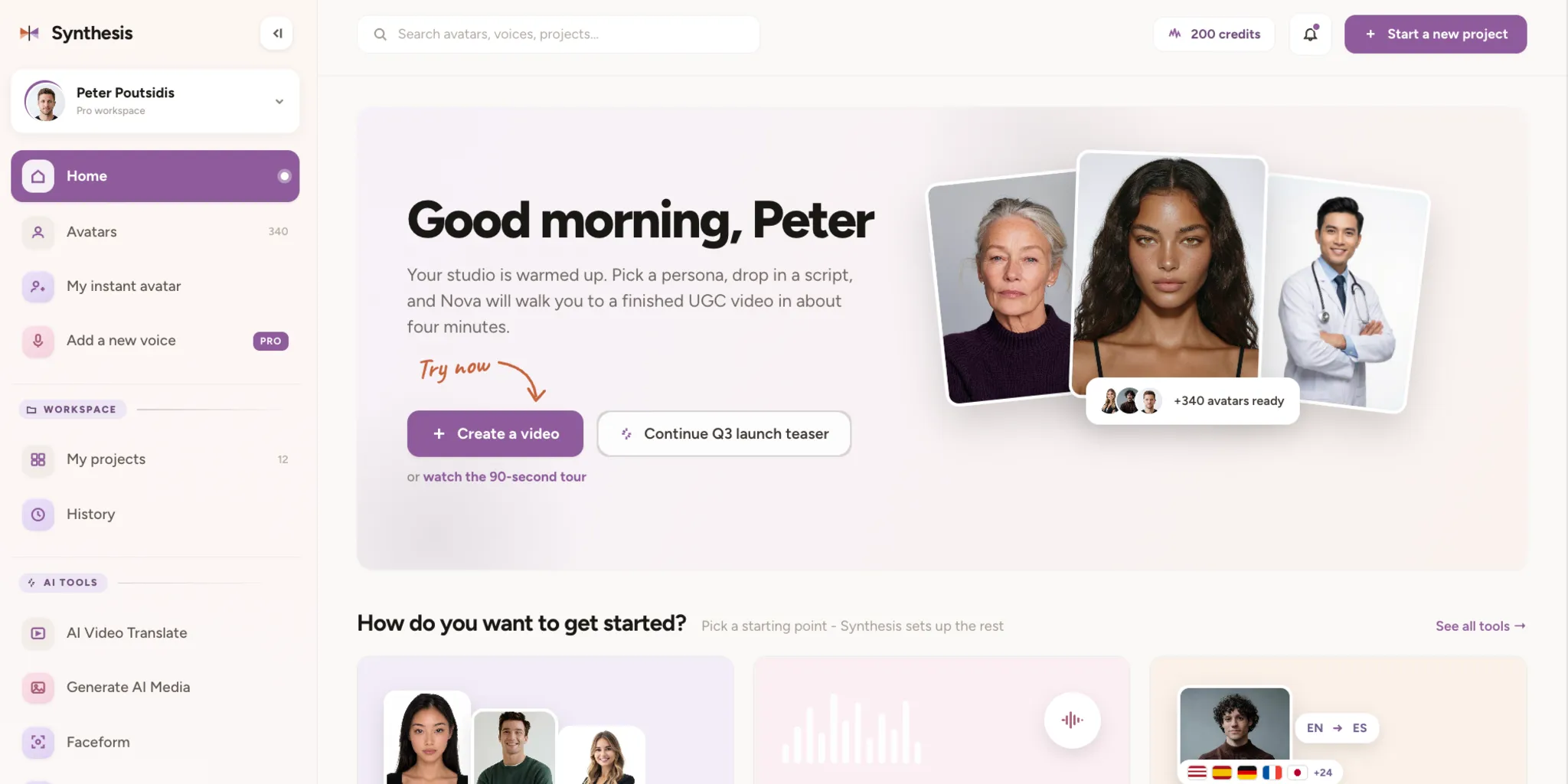
The home screen routes creators to avatars, voices, images and translation from one catalogue of generative AI tools.
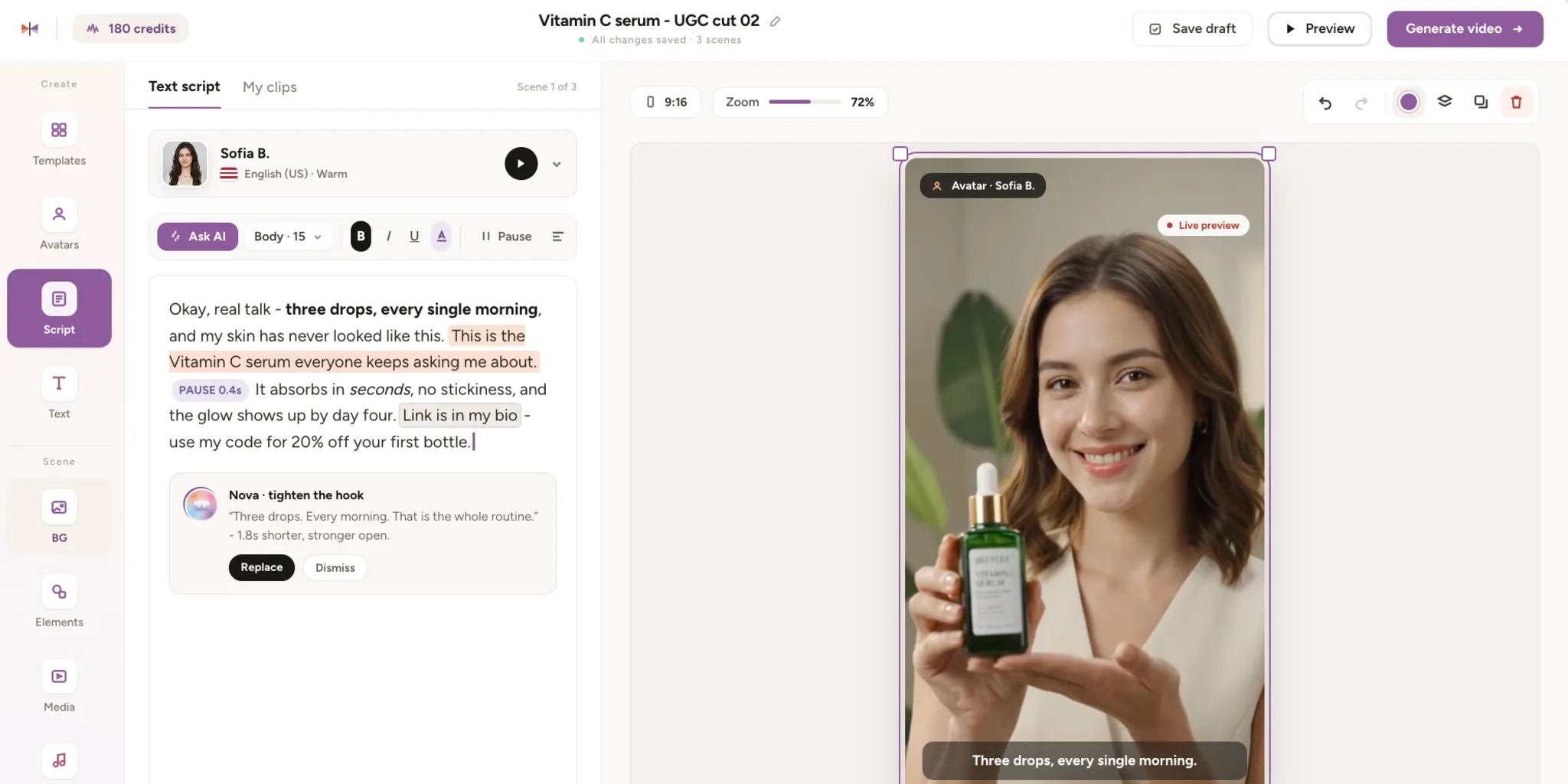
A scene-by-scene editor pairs the script with a live avatar preview, with inline pauses, emphasis and AI suggestions for tightening a hook.
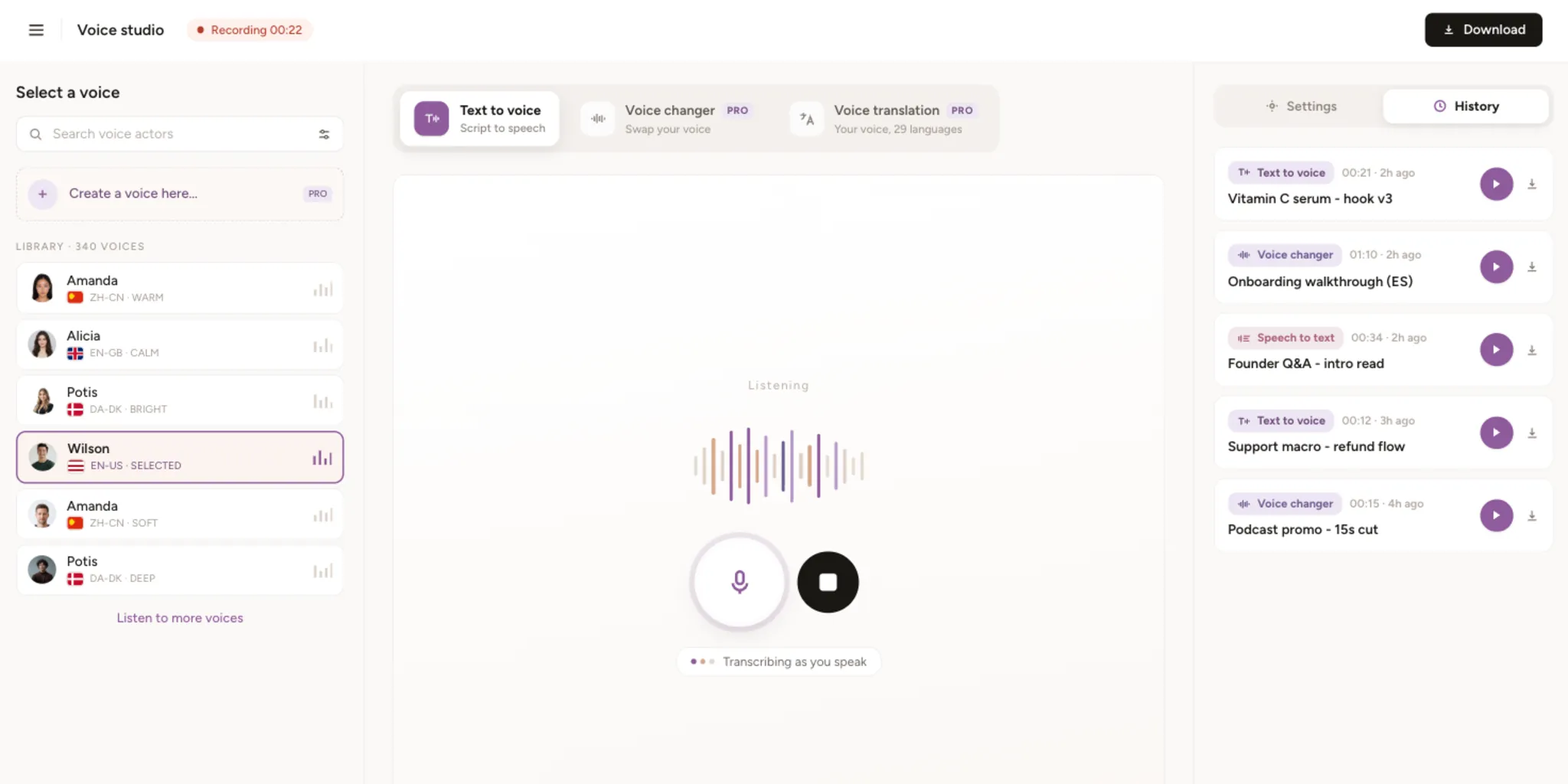
The voice studio offers a large catalogue of voices across many languages and emotions, with cloning for a consistent narrator.
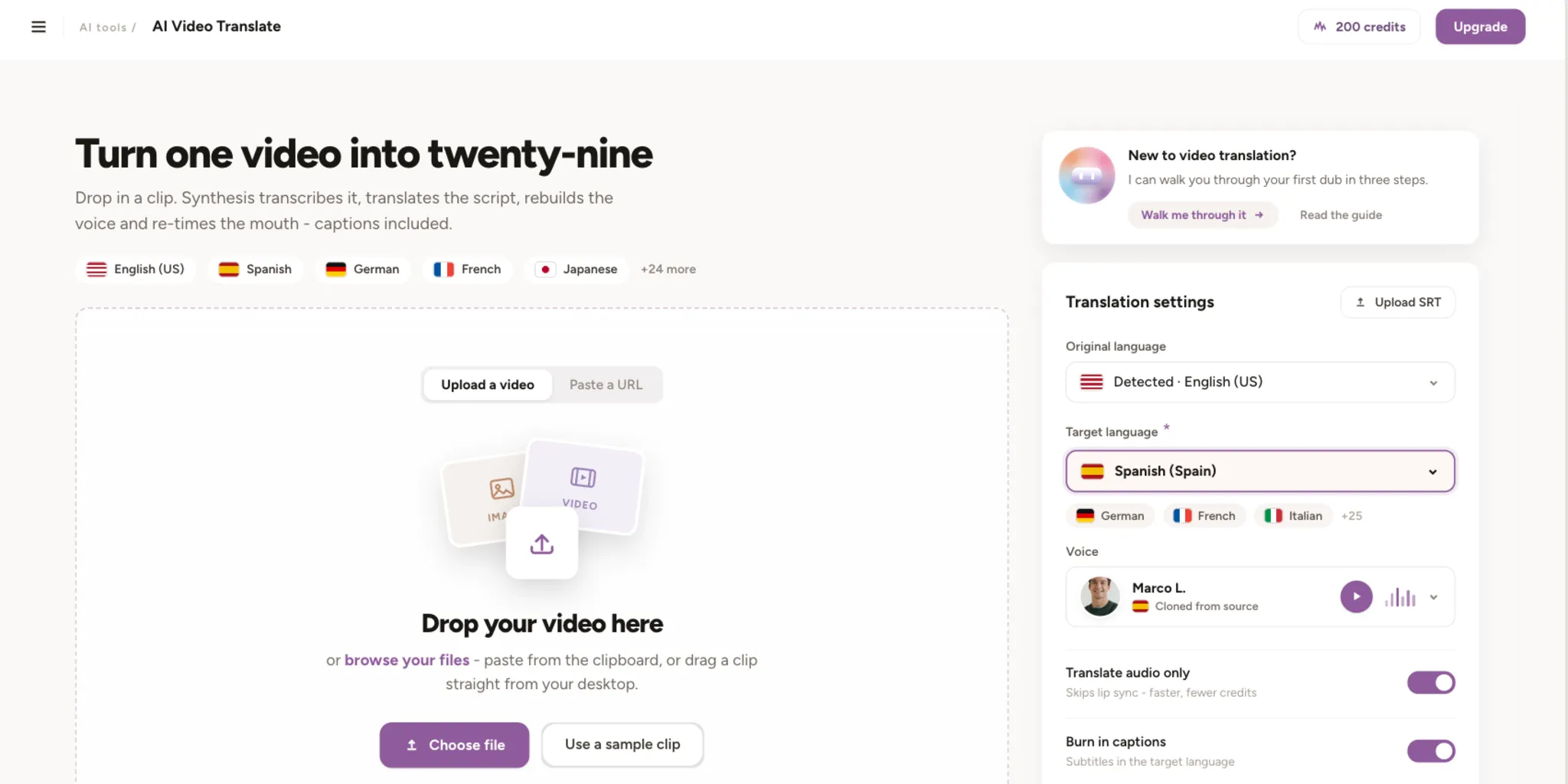
Existing video is dubbed and lip-synced into dozens of languages from one upload, without re-recording the presenter.
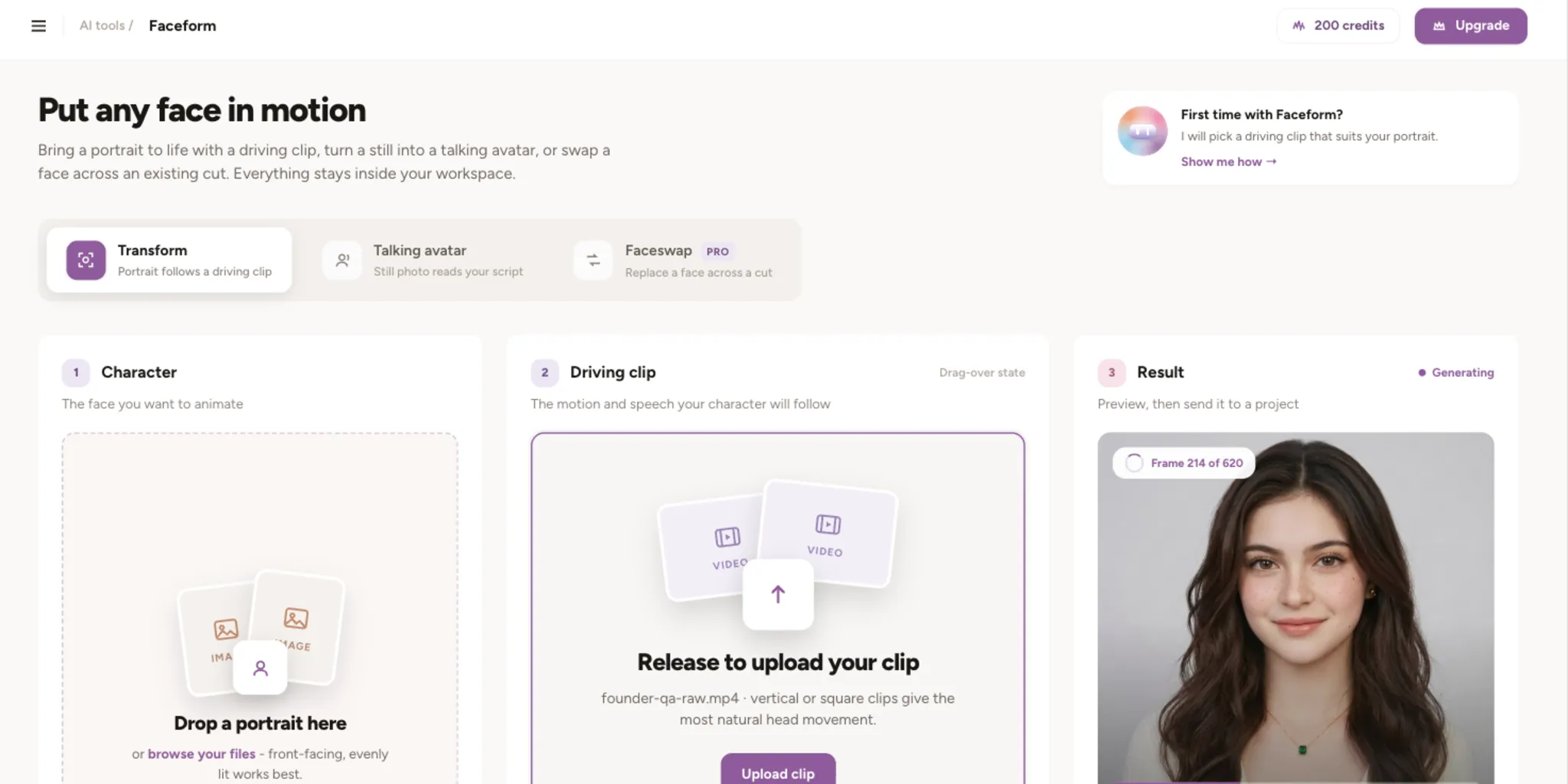
Faceform animates a still portrait from a driving clip, turns a photo into a talking avatar, or swaps a face across an existing cut.
- Generative AI media, SaaS
- Embedded product engineering and delivery, working across the client's backend, design and marketing teams
- A Vite and React single-page application for the product, Next.js for the marketing site
The client side was not technical, and that set the working relationship. We were not handed specifications. We were expected to watch what was happening in the models and come back with proposals: which model to move to, what was worth improving, what a competitor had just shipped that mattered. Keeping pace with the field was the actual job, and their product direction leaned on us to do it.
We solved it by building outward from that one generator. Voice, speech to speech, dubbing, user-generated video content, ad and commercial generation, talking photos. What started as a single output type reached eight or nine services on one platform, alongside an image studio and a Canva app. The hard part was never any individual generator. It was holding the platform coherent as the count grew, so that shipping the ninth service did not quietly degrade the first eight. We built their marketing site as well, and put substantial work into its SEO.
Collaboration was wide rather than deep in one place. The backend sat on the client's side, marketing ran its own programme, design was a separate team again, and our people worked across all three. Canva was a fourth counterparty: it reviews what enters its app catalogue against its own criteria, so shipping there meant clearing somebody else's bar rather than the client's.
The relationship held well past one delivery. The image editor was spun out as a product under its own brand, which we also built, and a separate AI voice-calling product followed under the same umbrella. The client eventually rebuilt the marketing site themselves with AI tooling, which is where our involvement in that one piece ended.
Product scale rather than a client-confirmed business metric: a catalogue that grew from one generator to eight or nine services during our involvement, plus an image studio and the Canva integration. Those are facts about what the product became, not a performance claim we make on our own behalf. The relationship then extended into two further products under the same umbrella.