Simavi-edu: turning three separate builds into one learning platform
Simavi-edu grew out of a problem we had created for ourselves by succeeding three times over. We had built the same client three separate things: a lesson and test authoring platform, an interactive quiz product, and a video player with quizzing layered over it. All of them worked, none of them knew the others existed, and a customer who wanted to run a training programme had to assemble it out of parts. Simavi-edu is the layer above, where those parts become one platform.
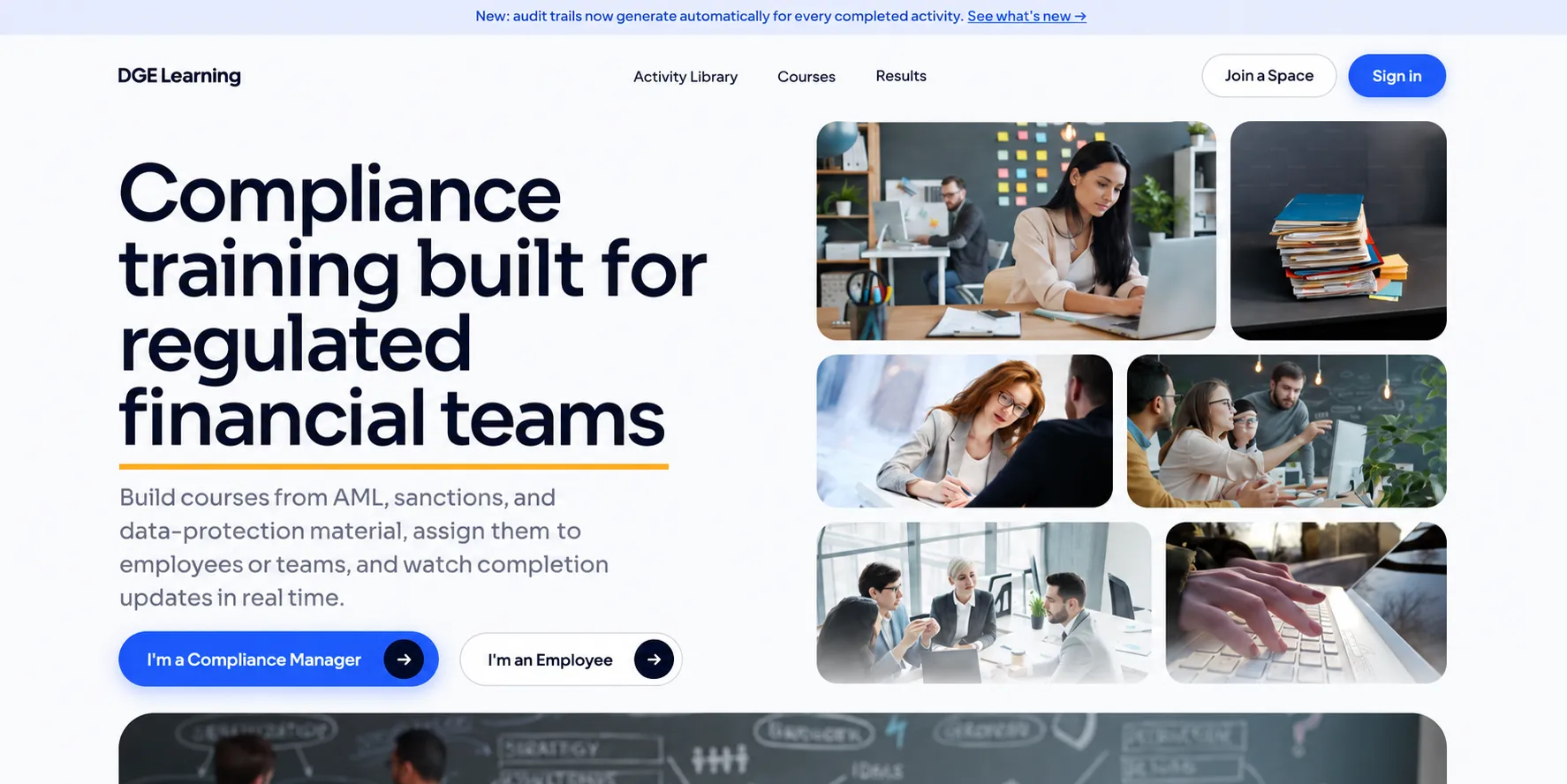
The platform's public entry point pitches compliance training to regulated financial teams and splits visitors between a compliance manager path and an employee one.
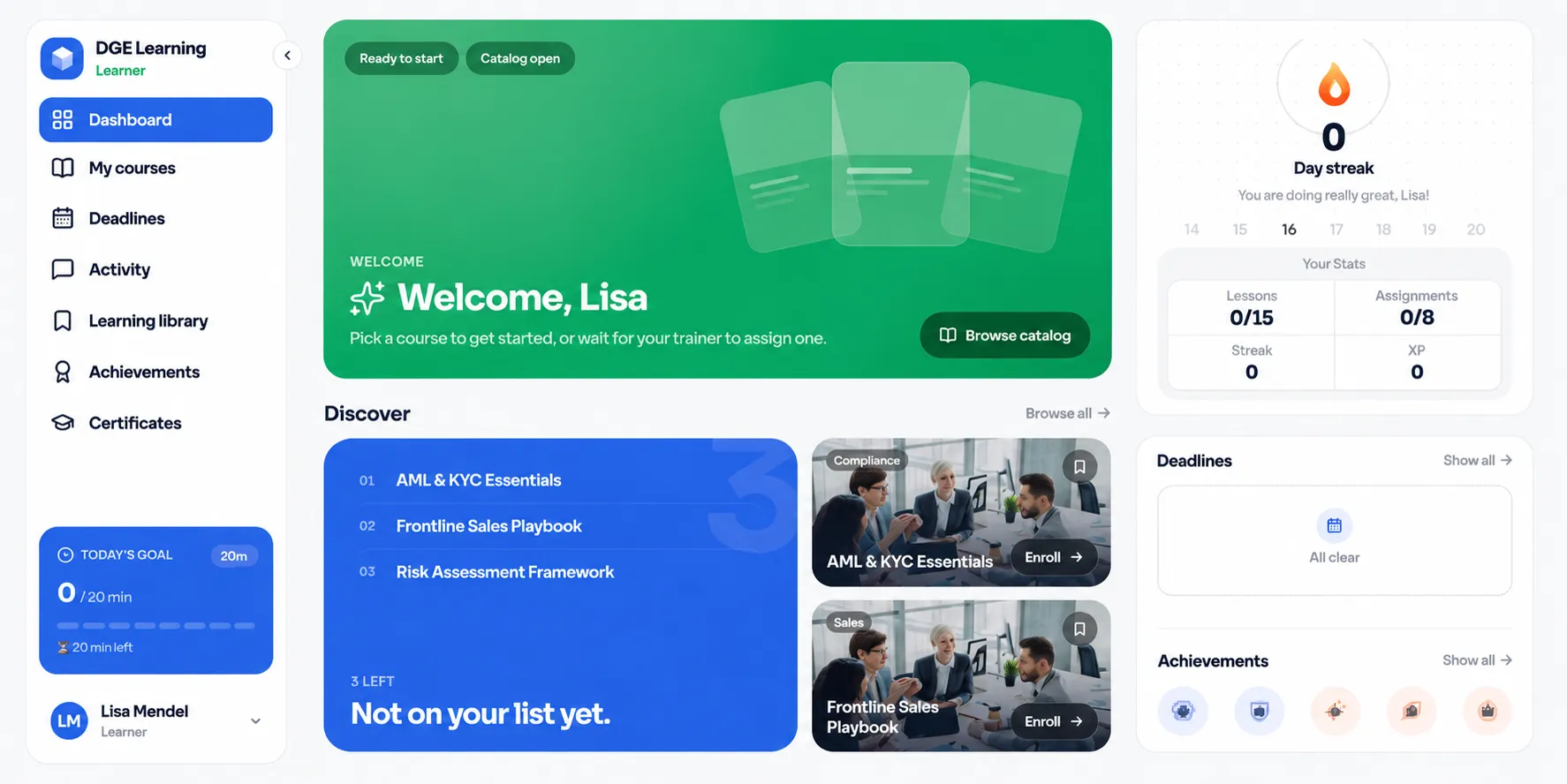
A learner lands on their daily goal, streak and stats, with a Discover rail of courses they can enrol in themselves and deadlines and achievements alongside.
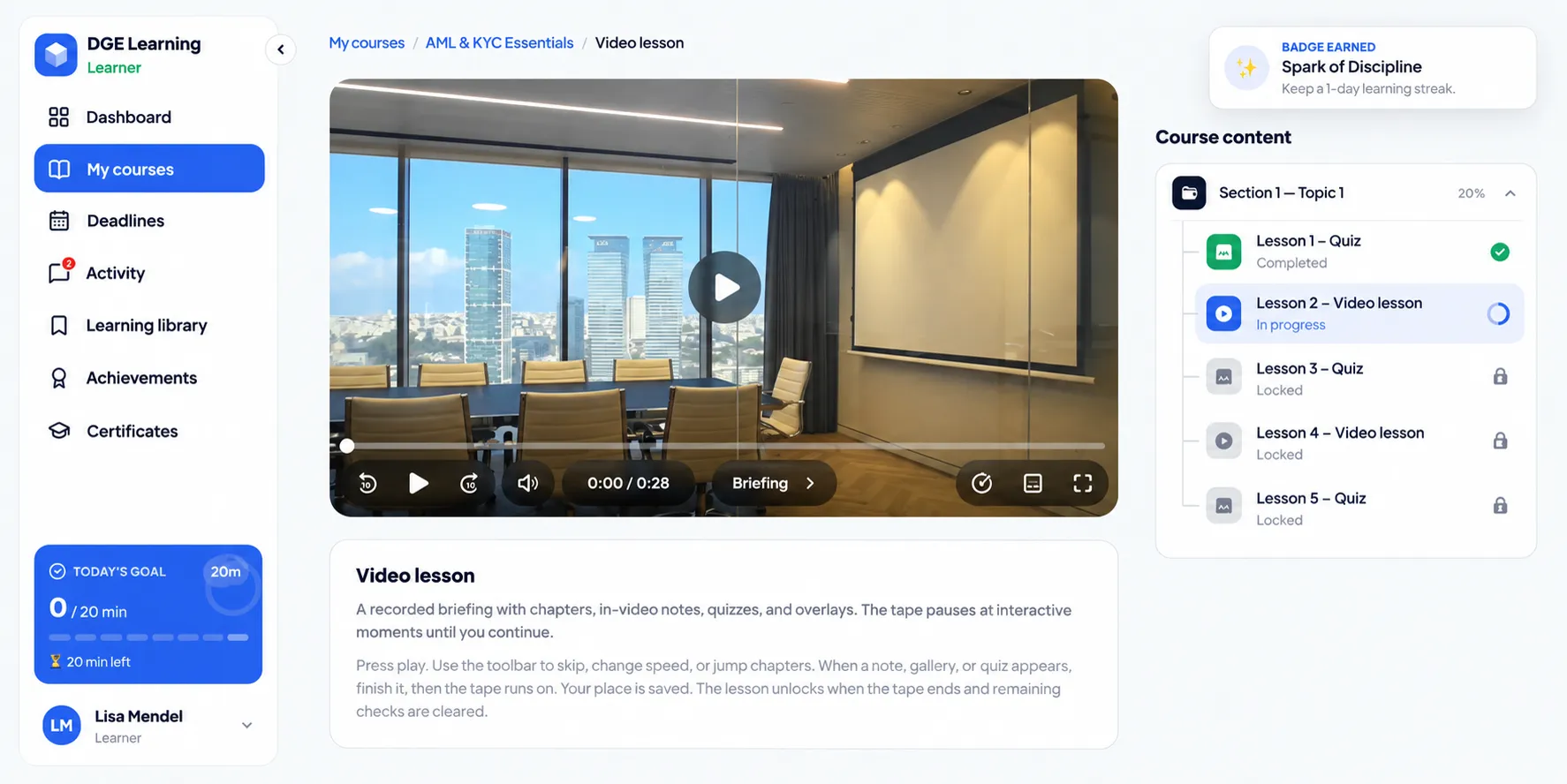
The player runs a recorded briefing with chapters, in-video notes and quizzes, while the course content rail shows which lessons are complete, in progress or still locked.
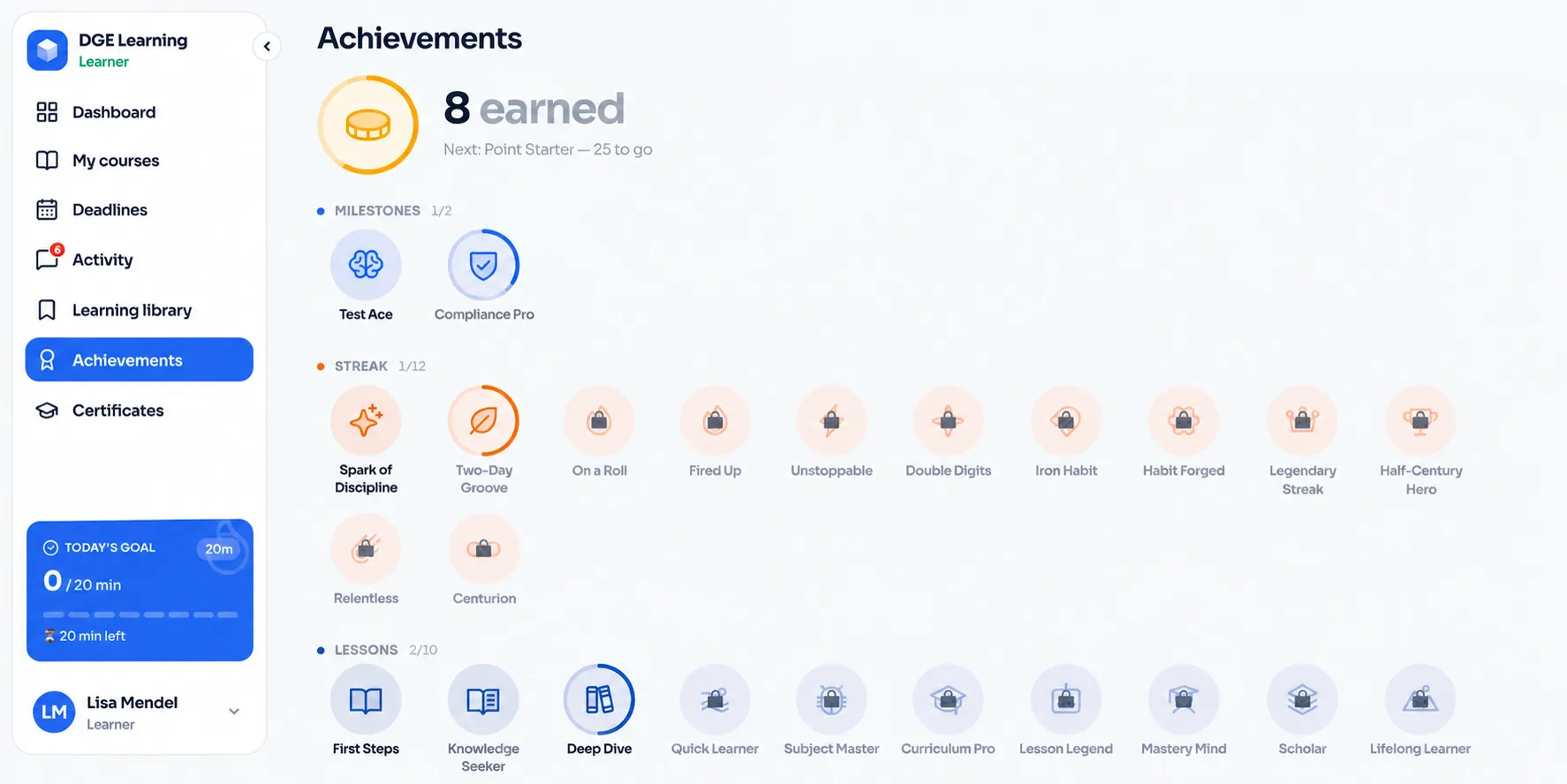
Badges earned and still locked are grouped by milestone, streak and lesson progress, so a learner can see how far into a programme they are.
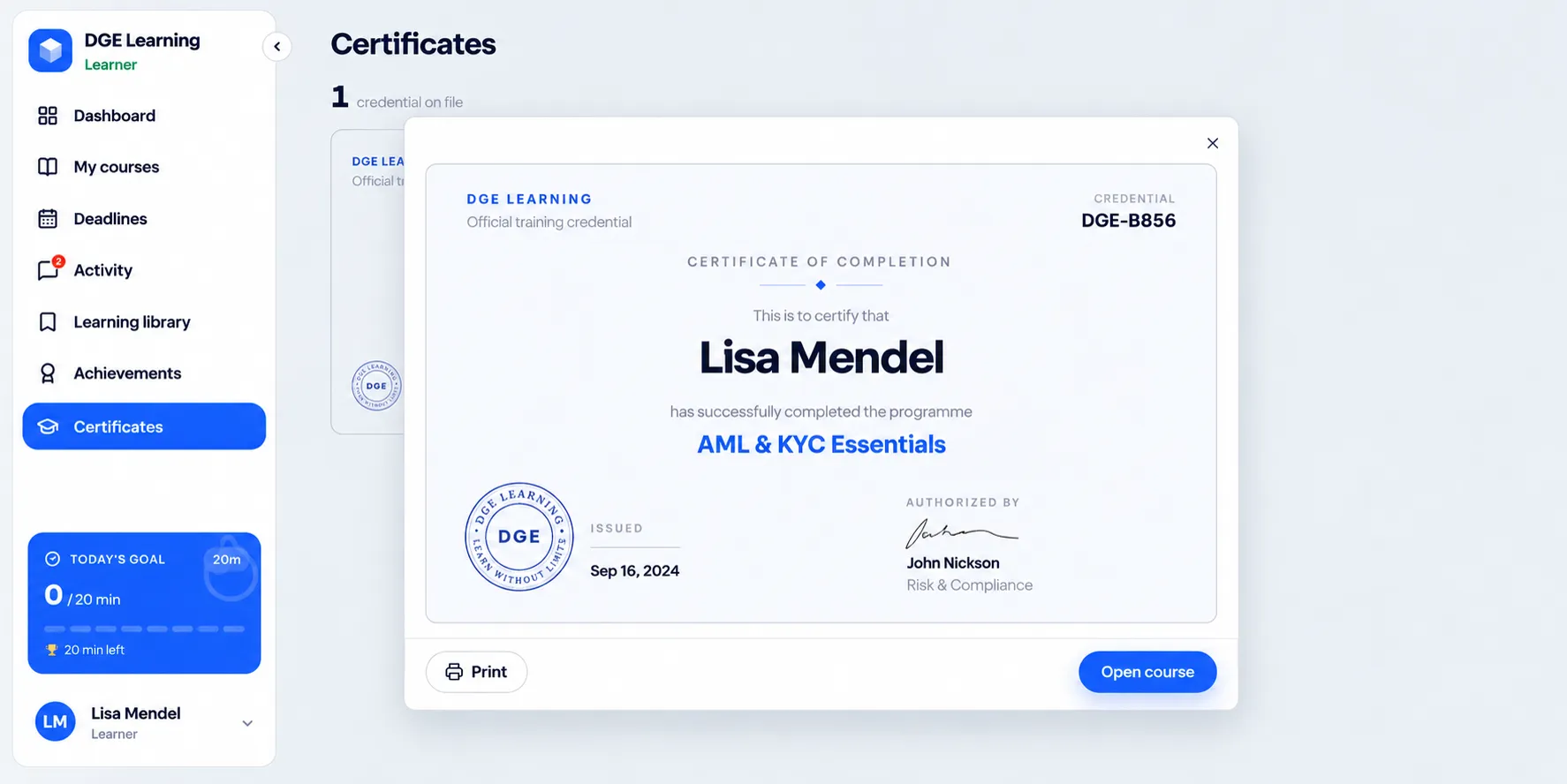
Finishing a programme issues a numbered credential the learner can open or print from their certificates page.
- Corporate and educational training
- Embedded delivery covering project management, UX audit and testing, alongside the client's own designers, product people and marketers. The third of three engagements with this client
- built by reusing and modernising the codebases of the earlier lesson-authoring and video-quiz products, consolidated into one platform
What the client wanted was something closer to Coursera or Udemy: a course catalogue as the front door, with the existing quiz and video products becoming what a learner is handed once they are inside. Closed rather than open, because the buyers are enterprises and schools, so it had to be secure. Tailorable too, closer to a content management system than to a fixed product, since no two training programmes want the same content.
Understanding the job meant treating our own earlier work as the raw material. The engagement was as much consolidation as construction: taking legacy code out of the previous projects, bringing it up to date, and making the pieces behave as one ecosystem under a single mechanism rather than as three products that happened to share an owner. The quiz work carried its own constraint, since its activity types had to hold up across the full range of devices and input methods people actually use.
The obstacle that shaped the delivery was not technical. The client's designers produced roughly a hundred Figma frames, everything drawn, every button considered. It looked good and it was close to unusable, with no clear path through it and no obvious next step. Building it as specified would have been the easy call. Instead we ran a UX audit, cut the concept back to what an MVP actually needed, and pitched the simpler version to the client, who took it.
From there we worked the way we had on their earlier products: iterating design, arguing the feature set, and settling MVP scope together across a client team that brought its own designers, product people and marketers to the table.
The pieces built separately since 2022 now run as a single platform, still in active use. What it closes is a line that started with a schools-and-education authoring tool in 2022 and ends with a corporate learning platform: three engagements with one client, each shipped on its own terms, and the third is where they stop being three products and start being one ecosystem, a course catalogue over the video player over the activity model. No client-confirmed figure is published for this engagement, and the client may return for a further stage.