Savvy: rebuilding a three-sided investment platform while it ran
Savvy is a US investment platform with three audiences on the same regulated data: investors managing portfolios, creators publishing strategies others subscribe to, and an internal back office running compliance, trading and configuration. The platform decides what to trade and when, and a clearing broker executes and holds the assets, which makes every screen we build one a compliance officer can be asked to justify. We won the account on a single rebuilt flow and have been building on the platform ever since.
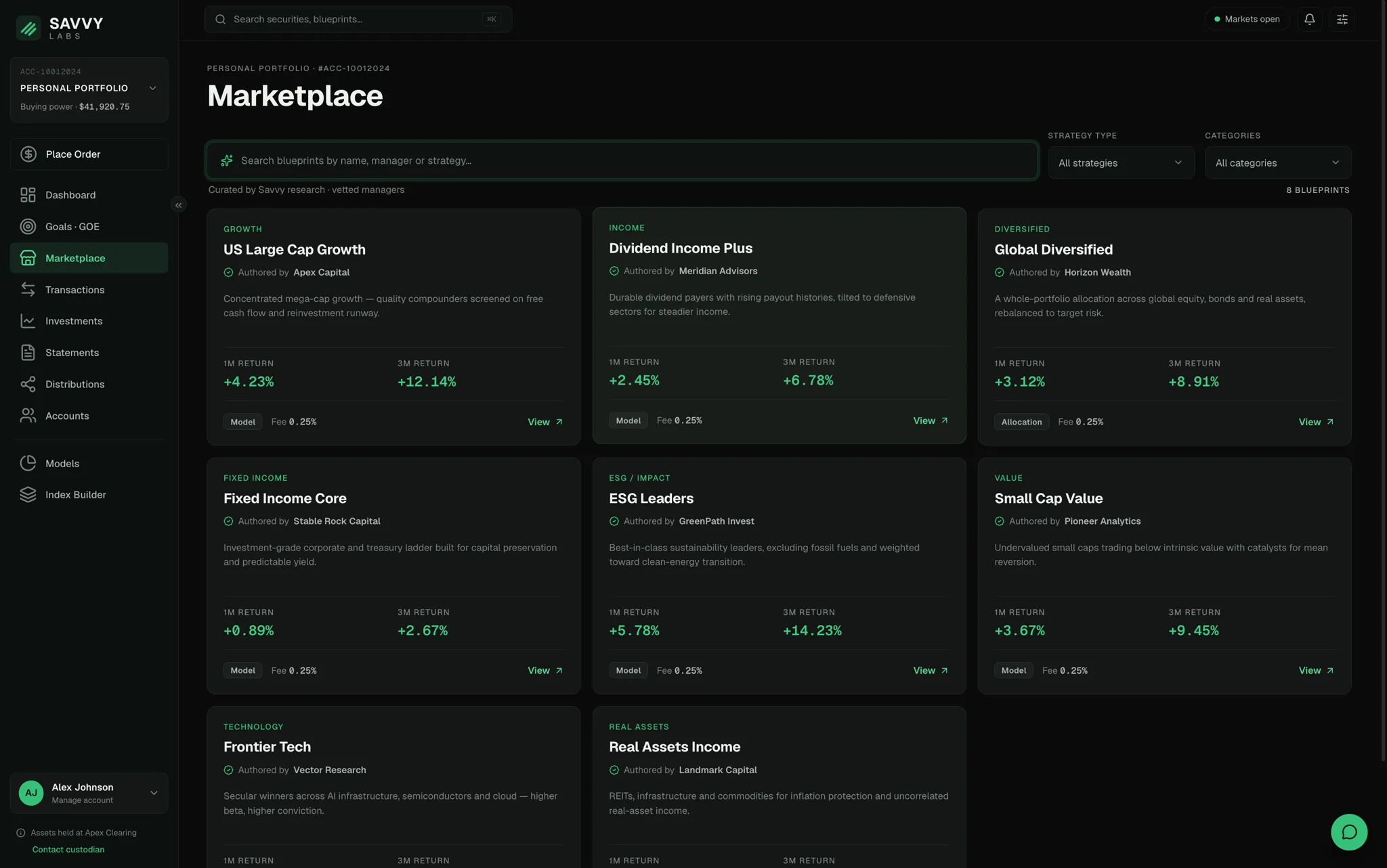
Investors browse curated investment strategies with performance, risk ratings and minimums before subscribing to one.
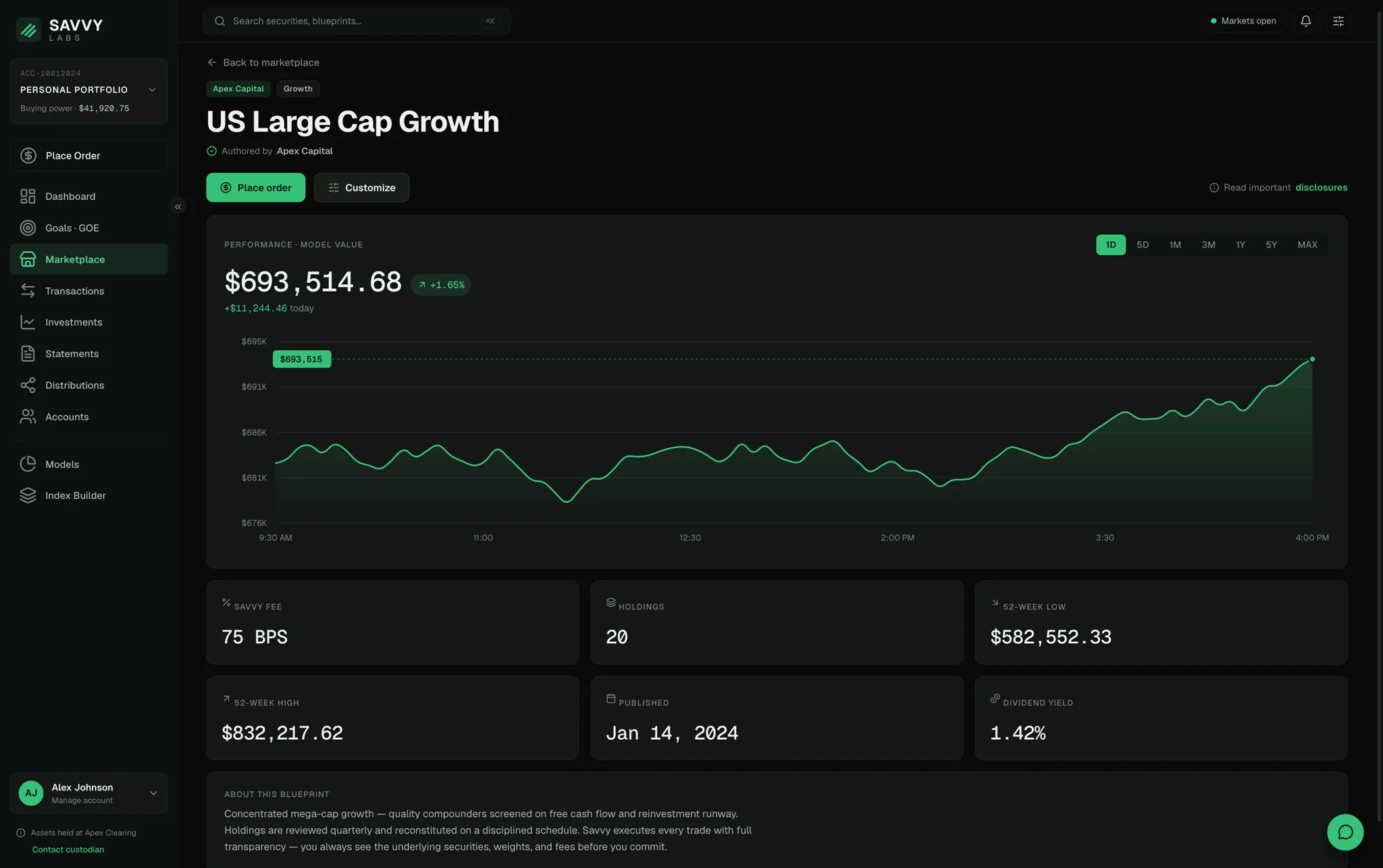
Each strategy page shows its author, model performance, fee, holdings count, trading range, publication date and dividend yield.
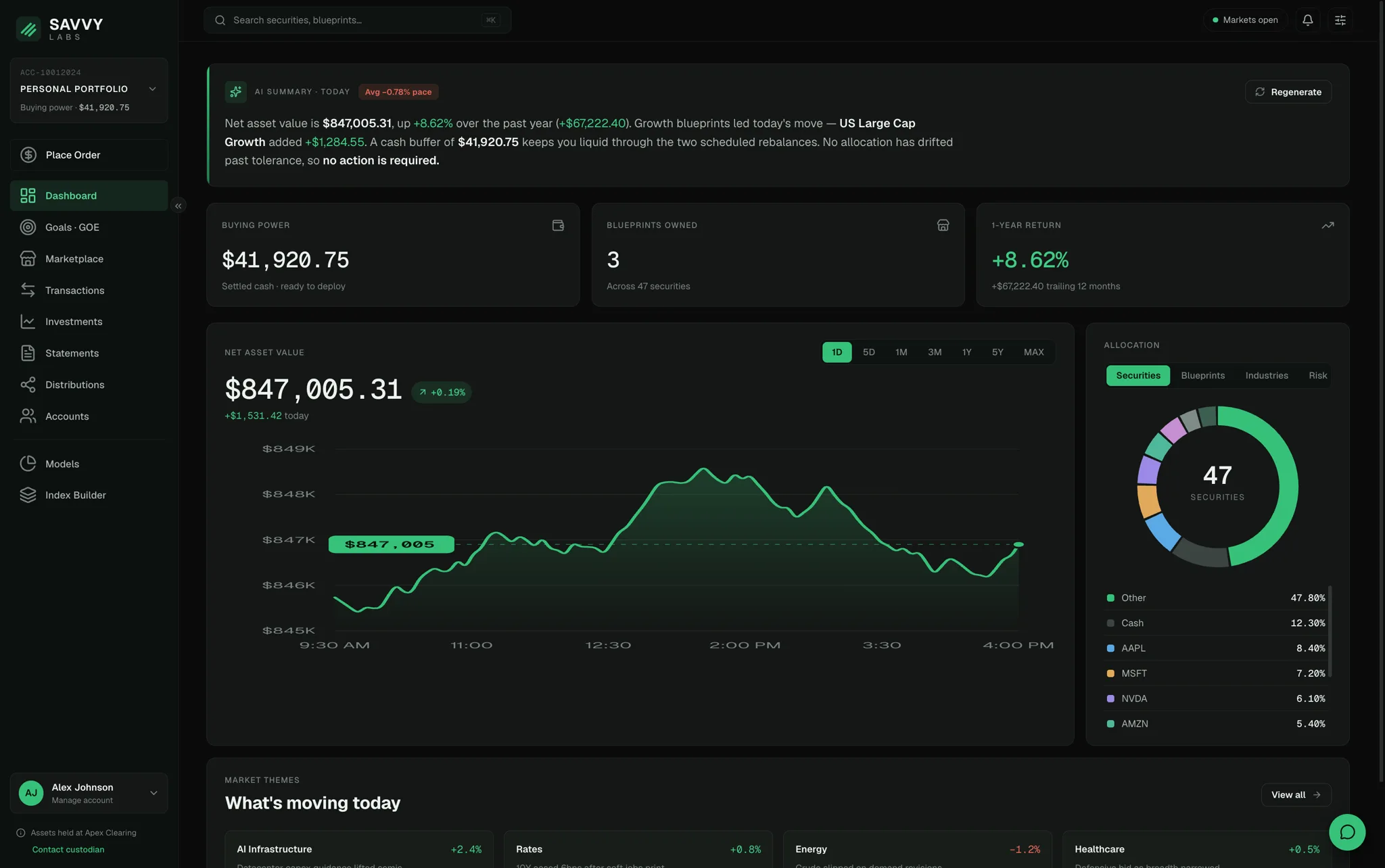
The dashboard combines an AI summary with buying power, portfolio value, annual return, allocation and current market themes.
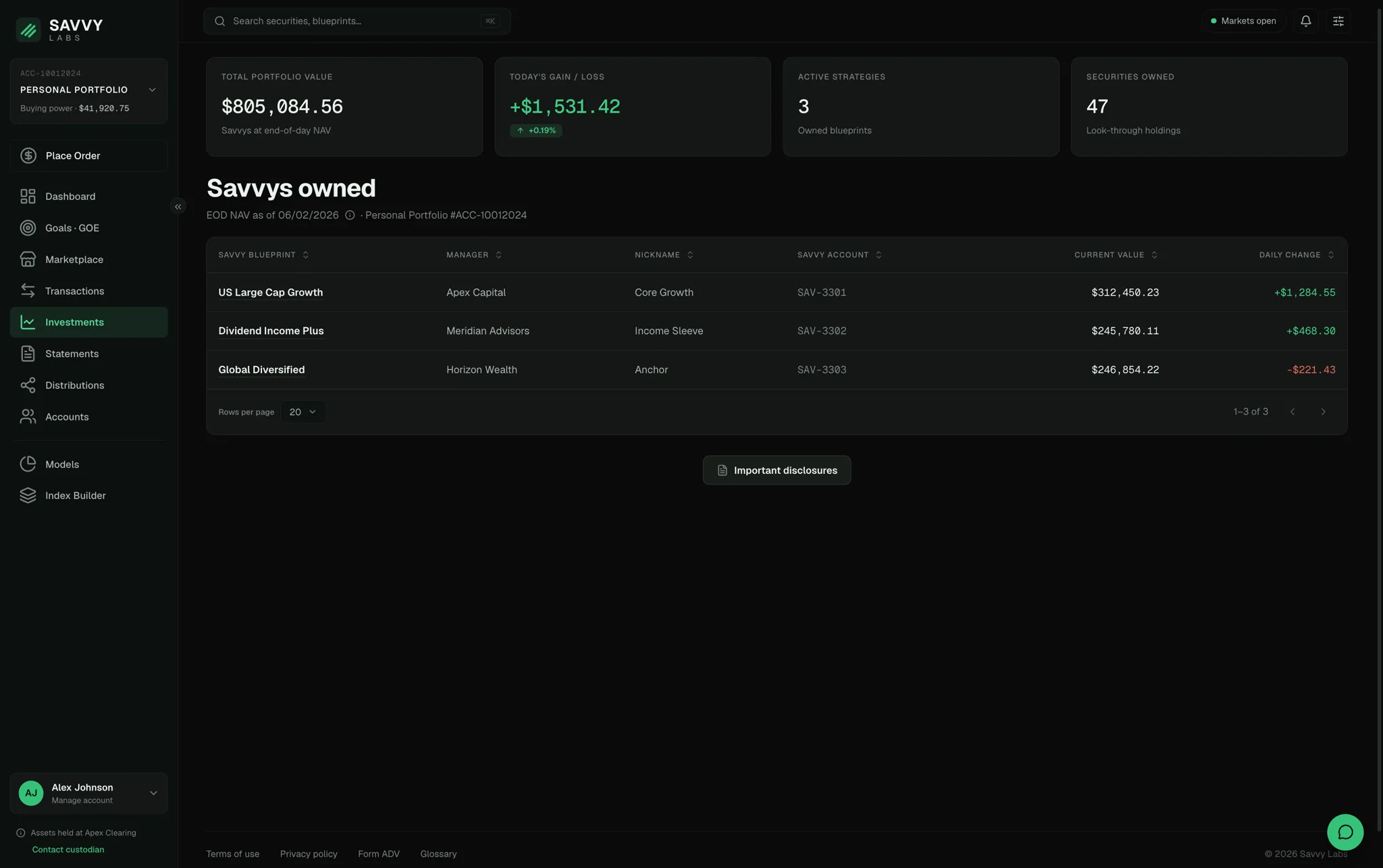
Investments totals portfolio value and daily change, then lists each owned strategy with its manager, account, value and daily move.
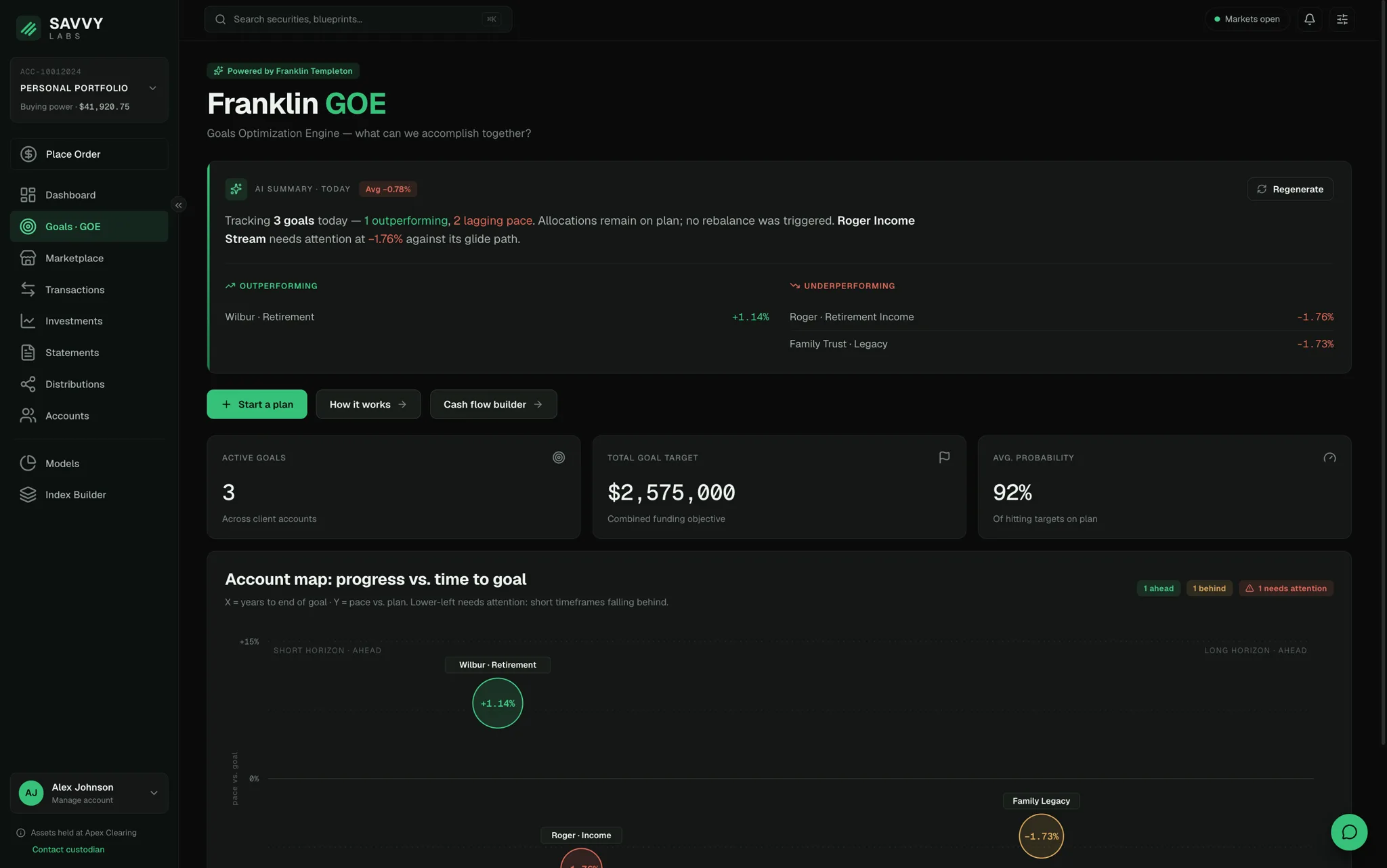
The goal-oriented planning engine models long-term targets against current holdings, contributions and projected growth.
- Fintech, investment and wealth management, US market only
- Embedded frontend engineers working inside the client's own teams, currently two, ongoing
- React and TypeScript on Vite with MUI, GraphQL and generated REST clients against the client's Ruby on Rails back end, enterprise data grids and financial charting libraries, AWS hosting with production monitoring
They already had a platform: an investor side, an admin side, pages of data and charts, all of it more or less working and none of it built well. What they wanted was not a rewrite pitch, it was proof that somebody could do this properly, so we took their account-opening flow, nine steps of legal and financial information ending in a signature, and rebuilt nearly all of it: clean, properly validated, and a flow you can watch working end to end. The engagement started on the back of that demo.
The first phase was less about new features than about making the codebase something features could be added to, page by page across both surfaces, with the product live the whole time. Two calls were ours to argue for and theirs to approve: replacing the component library wholesale, and taking the application off a server-rendering framework it had no use for, since this was an app behind a login rather than a site that needed to be found on Google. Neither move showed up as a feature, both are the reason the years that followed were possible, and all of it was done by hand, before AI-assisted development existed to lean on.
Then the client reorganised and staffed up, and the work turned from maintenance into expansion. Whole new modules followed: goal-based investing, where an investor states a goal and the platform builds and funds a strategy toward it; a builder for designing a year-by-year cash-flow schedule out of treasuries; a combined view across all of an investor's accounts, aggregated down a group hierarchy; and creator publishing with a staged approval queue, so a change to a strategy sits for an admin to compare against the live rules before it can reach anybody's portfolio.
That phase also changed how the work ran. A single module could carry five or six people, ours and theirs mixed together, with direction arriving from several project managers at once, and we treated staying aligned across that as part of the job rather than an obstacle to complain about. It is where our conviction about bringing an embedded planning lead to an engagement was earned.
The platform is live and the engagement is ongoing, years in, with our engineers still building on it. What started as an inherited codebase nobody could add to is now a genuine multi-tenant product: named institutional asset managers are onboarded as strategy providers, and the largest of them gets its own white-labelled investor experience, delivered behind feature flags rather than a separate fork of the product.
We deliver the decision and compliance layer. Execution, custody and identity verification sit with the client's institutional counterparties, whose names are their commercial relationships rather than ours to publish.