Phedra: An AI image editor for people who cannot edit images
Phedra is an AI image editor built for people who have never edited an image. It launched at a moment when changing a photo by describing what you wanted was not yet something ordinary people could do, and the everyday version of the problem is small and universal: you have a photo, you want one thing out of it or one thing changed, and every tool that can do that expects you to already know how to edit images. The client was not technical, so working out what had actually been asked for was as much of the job as building it.
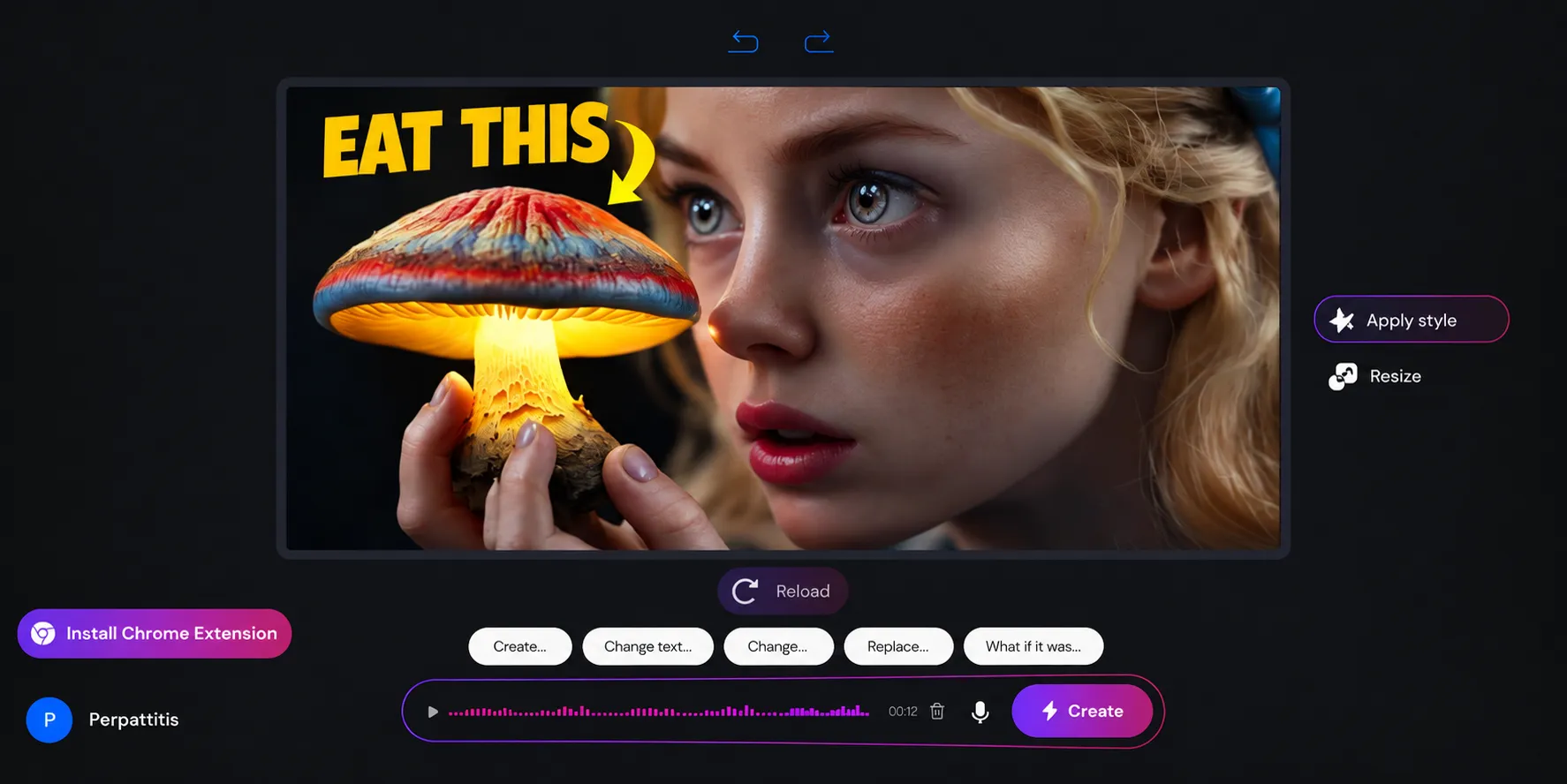
The edited image sits on the canvas with undo and redo above it, suggested follow-up edits below, and a voice prompt bar for describing the next change.
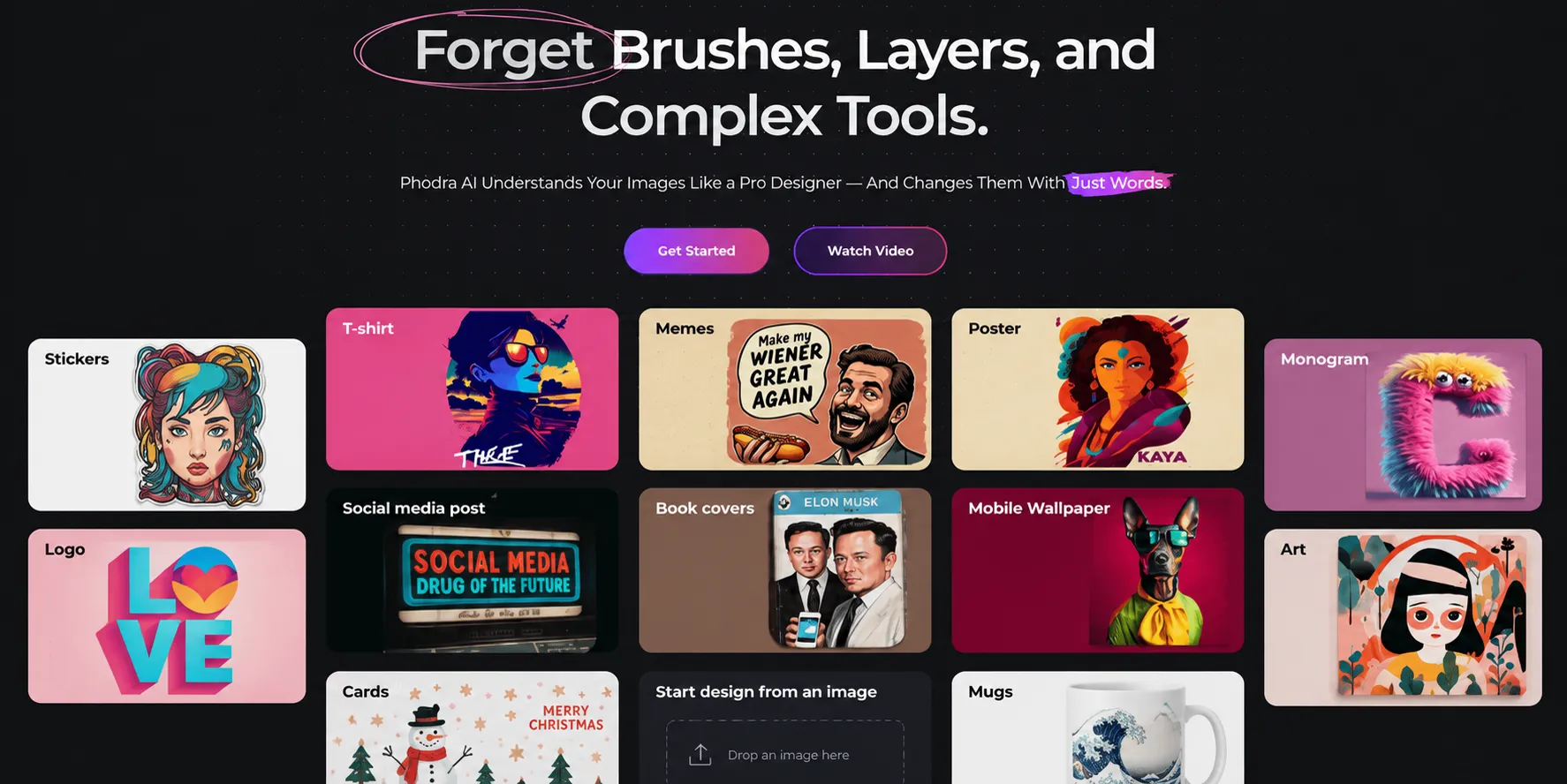
The landing screen starts a design from a template, stickers, t-shirts, memes, posters, logos, book covers, wallpapers, cards and mugs, or from an image dropped straight in.
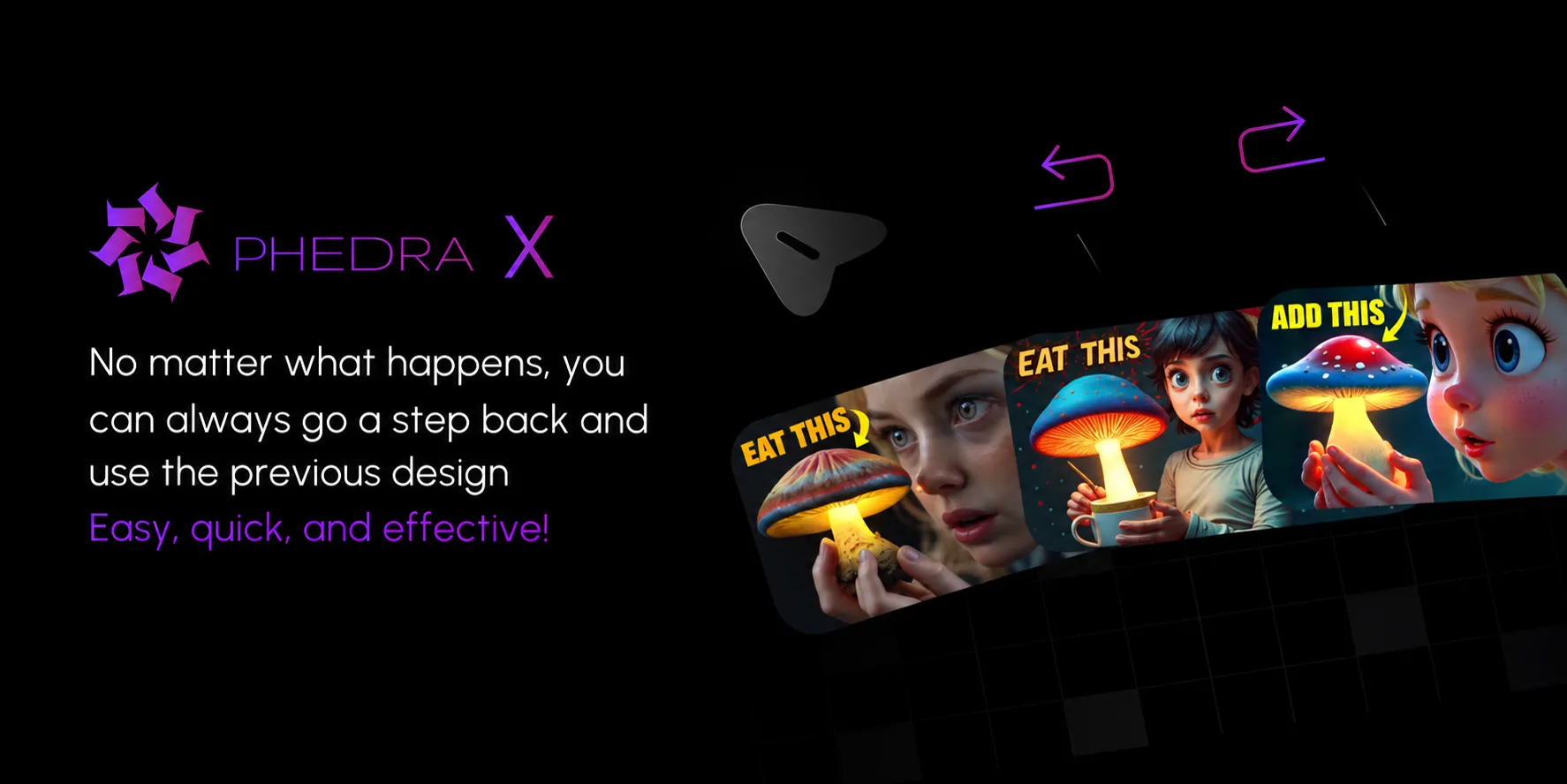
Undo and redo run across the whole edit history, so any generated version can be brought back when a change does not work.
- Consumer AI and creative SaaS
- Product shaping and full build, with project management on our side
- built on the generation APIs of its sibling product Synthesys, which is what made a full editor buildable by a small team
Phedra came out of an earlier product for the same owners: a separate brand, its own audience, its own job to do. We understood it as a product-shaping problem rather than a technical one, because the client could not shape it for us. Requests arrived as a line in a list, "add a mask function", with no specification behind it and no answer to what that should mean for a person using the product.
We built the editor out one capability at a time. Prompt to image first. Then masks, so a specific region could be changed rather than the whole picture. Then templates the product offered, and a brush for painting directly on a photo to remove something or apply an effect. Later it grew a commercial use we had not started from, where someone uploads a product shot, restages it against different backgrounds, and keeps the results as a reusable set.
Collaboration ran in every direction, which is what filling a specification gap actually looks like. When the client's designers pitched a version we reviewed it with them and reworked it rather than implementing it as drawn, we told the backend what we needed and negotiated what was feasible, and on the product itself we had real latitude to propose and decide.
The engagement ran about a year and closed cleanly, with the product finished and shipping. It ended because it was done, not because anything went wrong.
Phedra is live and appeared on Product Hunt. Both are observable facts about the product rather than results the client has attributed to us, and no performance figure was ever confirmed, so none is quoted here.