Maestro: four years, six products, one self-sufficient client
Maestro builds blockchain infrastructure: indexing and transaction APIs that other companies build their products on. When they came to us they had a strong engine and nothing in front of it, so every surface a customer, partner or investor has ever seen is one we built from nothing. Four years and six products later, the engagement ended with the client running all of it without us.
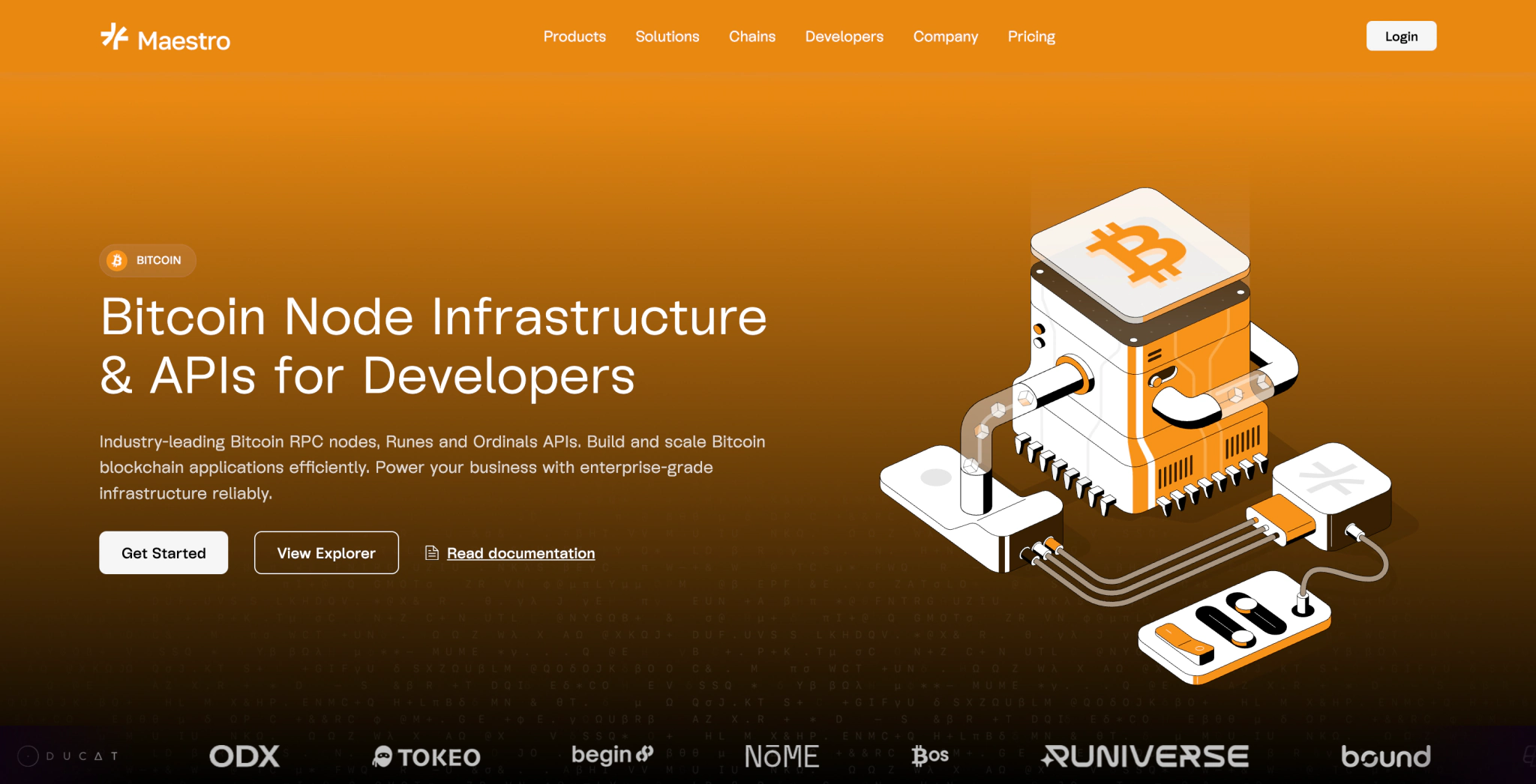
The marketing site and blog: landing pages for Maestro’s developer infrastructure, plus the company blog. Next.js, statically generated.
gomaestro.org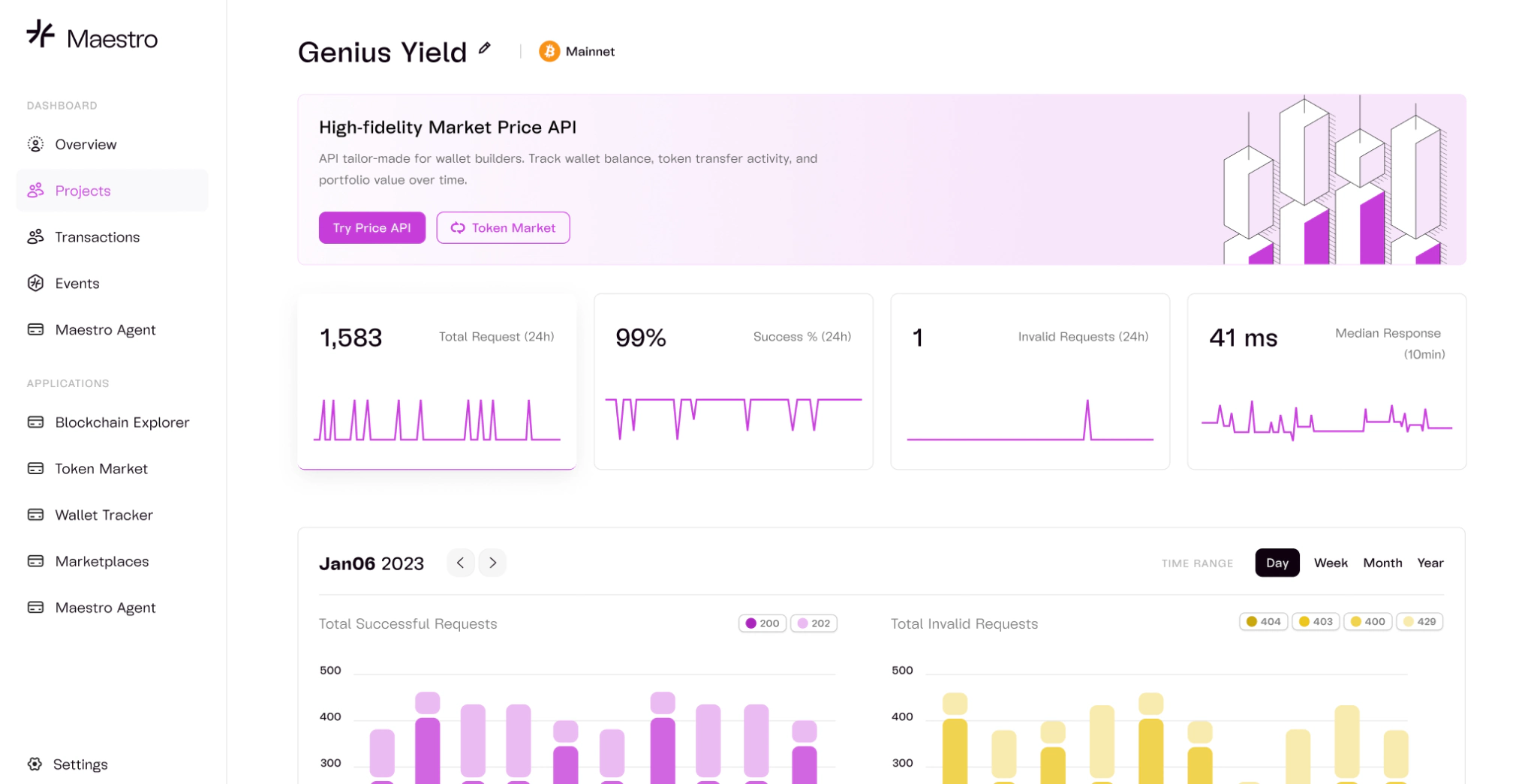
The developer dashboard: projects, subscriptions, billing, team access and usage tracking. React, later moved to Vite, redesigned several times.
dashboard.gomaestro.org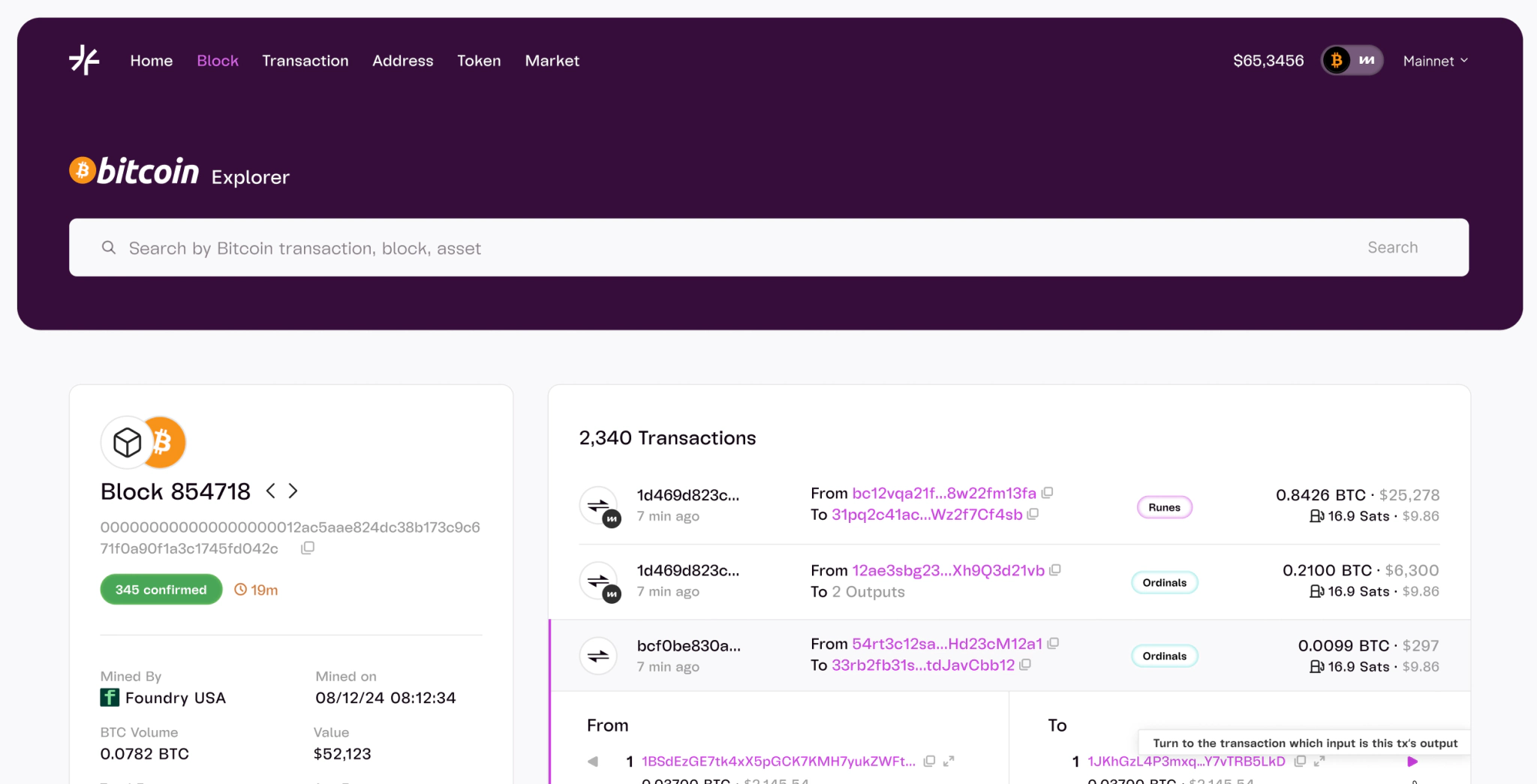
The block explorer, reading transactions, blocks and on-chain activity straight from Maestro’s own indexer. Tuned throughout for how fast it loads.
explorer.gomaestro.org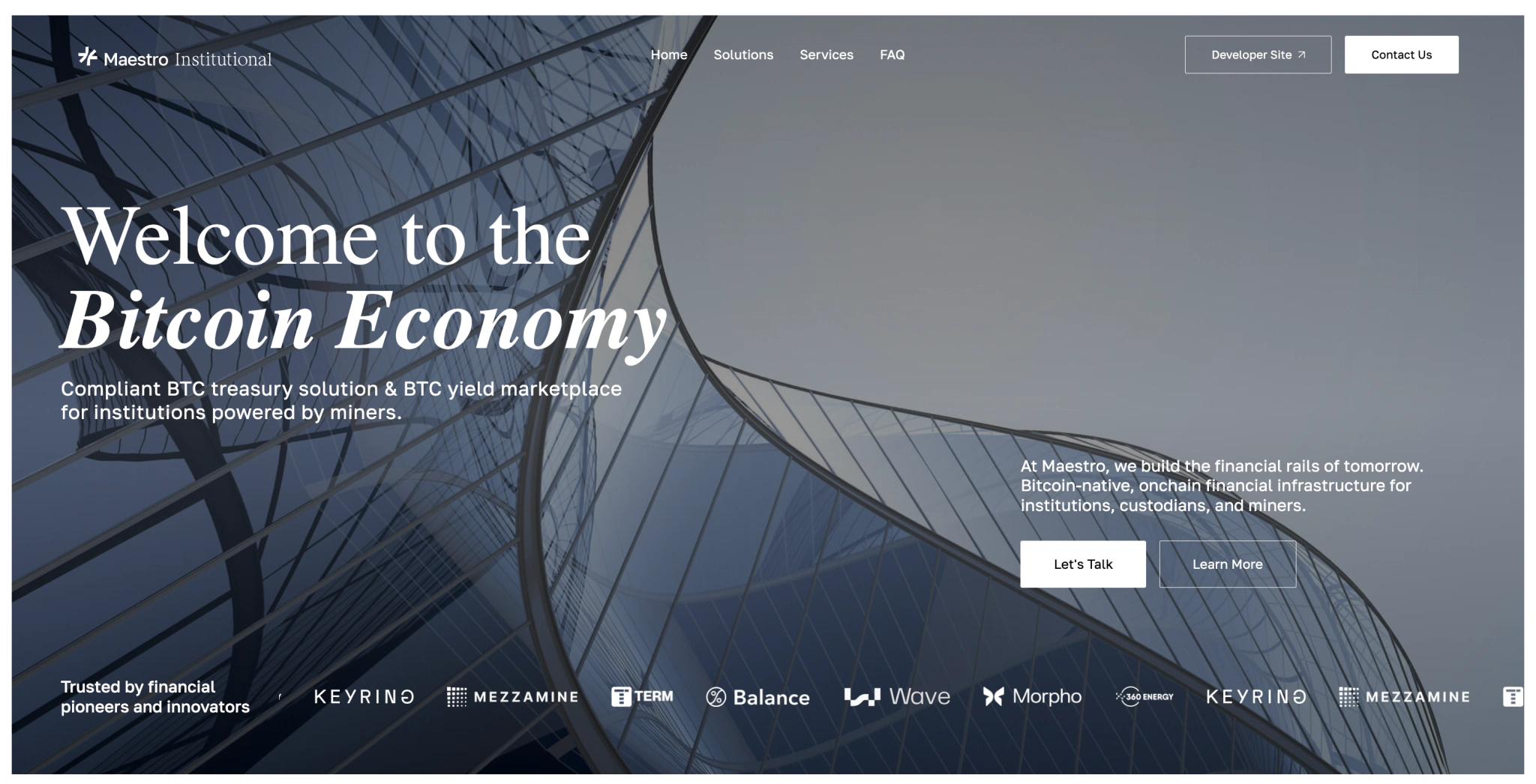
The institutional landing page for corporations, asset managers and Bitcoin custodians: one page, in a deliberately more premium style of its own.
gomaestro.org/institutional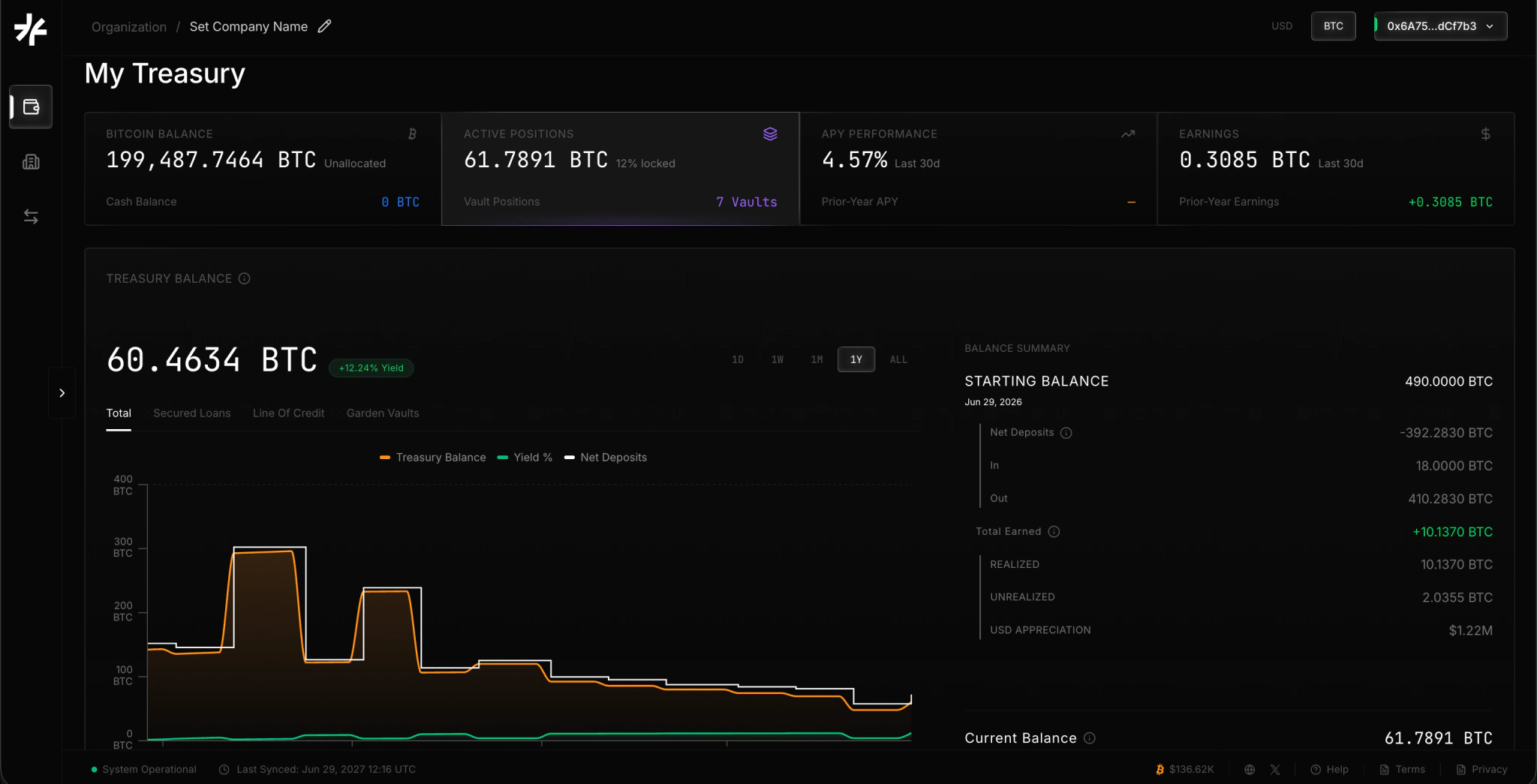
The Treasury Platform: institutions hold their BTC and pick from a marketplace of on-chain yield strategies. A glass UI over live wallet and chain data.
treasury.gomaestro.org- Blockchain infrastructure and fintech
- Embedded technical lead plus frontend engineers, a four-year engagement
- React and TypeScript throughout, Next.js for the public sites and Vite for the applications, a shared private component library, and a wallet and on-chain layer built on wagmi, viem and Privy
Maestro arrived as a Cardano infrastructure startup with a good idea, real competitors and no recognition, and the commercial question was how to sell a developer API. Two things had to exist: a marketing site that argued the product better than the competition's, and a dashboard that turned a technical service into something chargeable, with projects, subscriptions, billing, teams and usage a customer could see. We joined their CEO and their design agency in the design work itself, specified the missing internal API with them when it turned out the dashboard had nothing to run against, and shipped both on the timeline.
After that the relationship settled into a loop that ran for four years: they watched their market, came to us with a need rather than a spec, and we did the planning, the specifying and the building. Partnership opportunities called for a public blockchain explorer, where the hard part was not the data but standing out among a hundred explorers that already existed, so we worked the design out in the room with their team and later reworked the architecture so that supporting a new chain became a configuration job rather than a project. When the company pivoted into Bitcoin-backed credit for institutions, we learned an unfamiliar regulated domain, built and tested the on-chain integrations ourselves rather than leaning on a client team busy building the rest of the business, and iterated with their designers until the browser actually rendered the glass-like interface they had drawn.
AI was barely a factor when we started and central by the end, so we moved every product to an AI-first setup, with skills, hooks and agents living in each repository. That is what made a clean ending possible: their non-technical CEO could make his own changes to the marketing site and to the treasury platform without a developer in the loop.
Six products, every customer-facing surface the company had, from the site that first introduced it to the platform it runs on now. All of them live and in daily use, and all of them what the company's prospects, partners and investors actually saw and used as it established itself as an enterprise-grade Bitcoin DeFi infrastructure provider.
The engagement ended, and it ended well. The products were built, the company had shifted its weight to marketing and go-to-market, and the changes they still wanted they could now make themselves. The client was handed back self-sufficient, with a non-technical CEO shipping his own changes afterwards.
One honest boundary, because it is what makes the rest credible: smart-contract authoring was the client's own engineer's work. We integrated against it.