HiveLedger: the finance picture we built for ourselves
HiveLedger is the finance system we built for our own operations. We are engineers, and we are also a business, so we face the same questions our clients do: how much are we spending, what is coming in next month, which costs keep growing, and how profitable are we actually. Nothing off the shelf fitted the way we work, so we built the system ourselves.
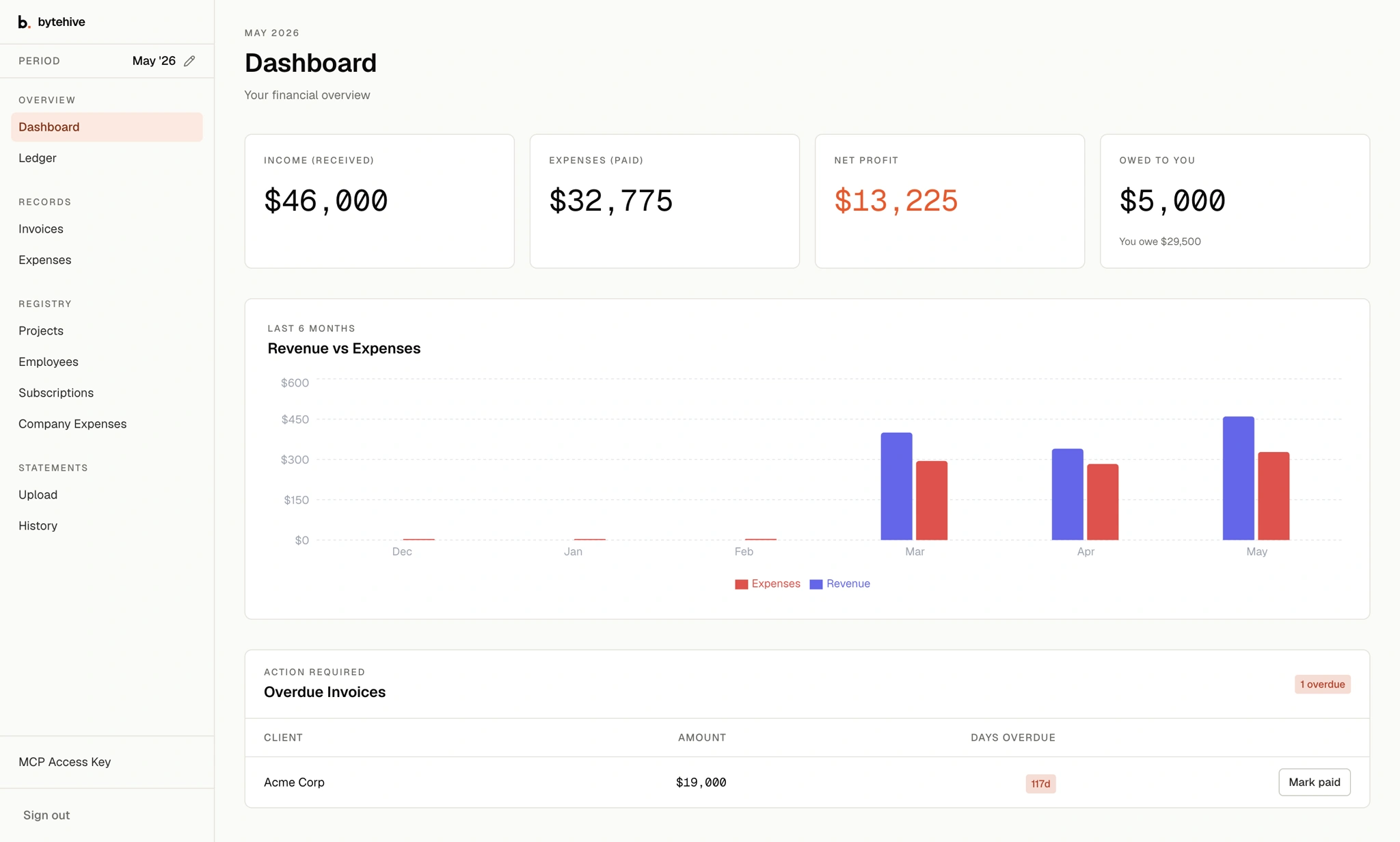
The dashboard for the selected period: income received, expenses paid, net profit, a six-month revenue-versus-expenses chart and overdue invoices that need action.
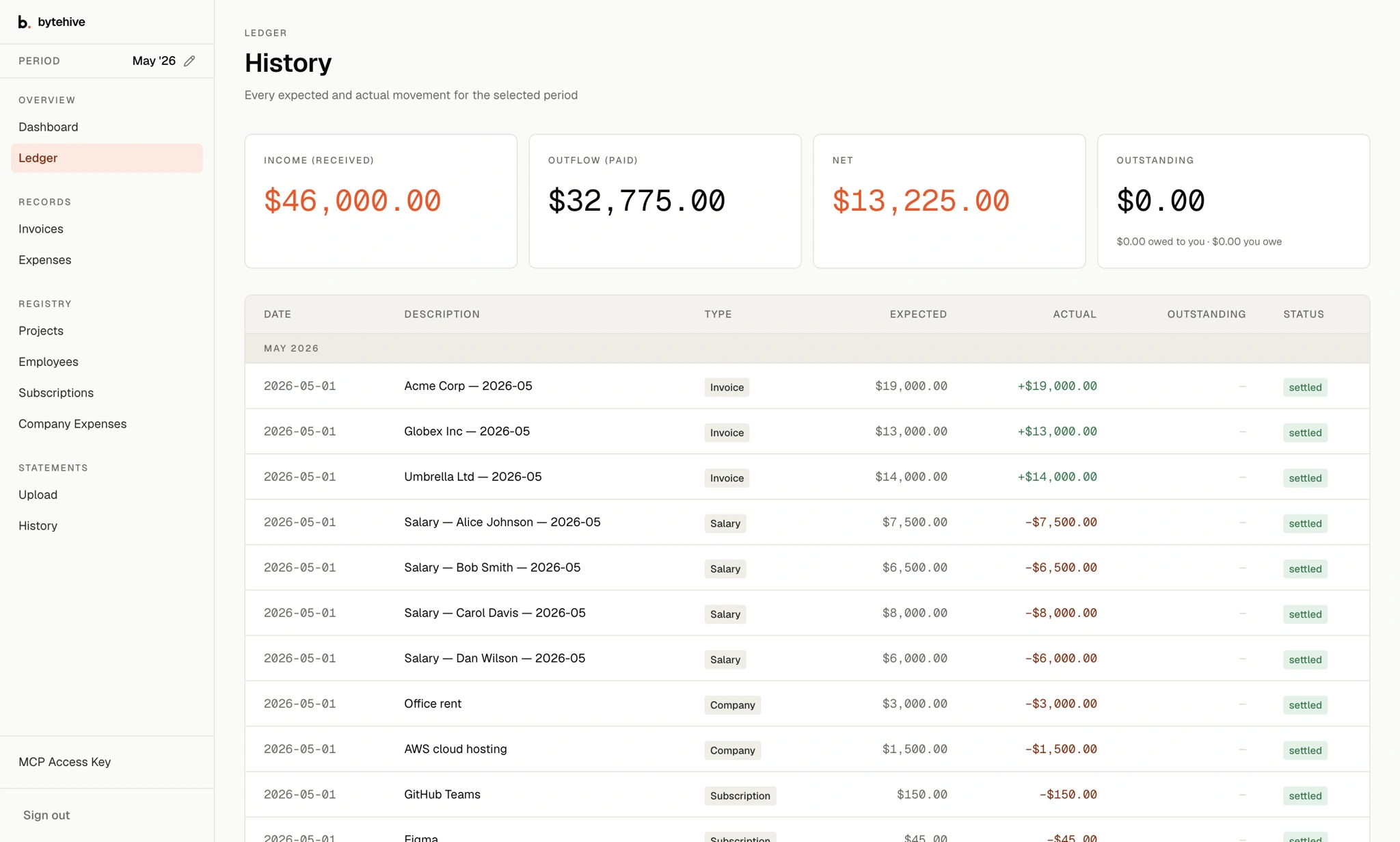
The ledger history lists every expected and actual movement for the period (invoices, salaries, subscriptions and company costs) with settled status and running totals.
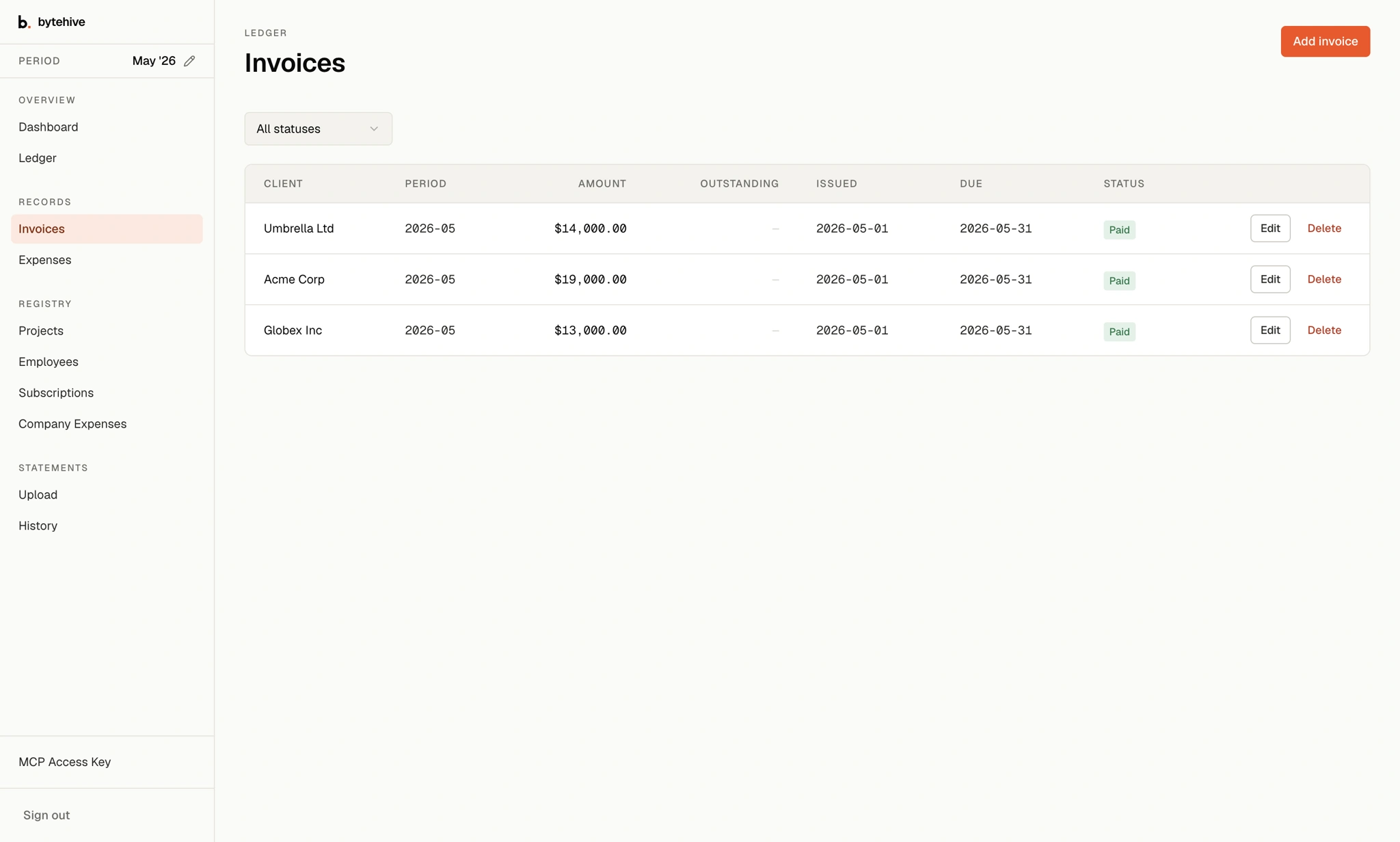
The invoices register tracks client billing by period: amount, issue and due dates, outstanding balance and payment status, filterable across all statuses.
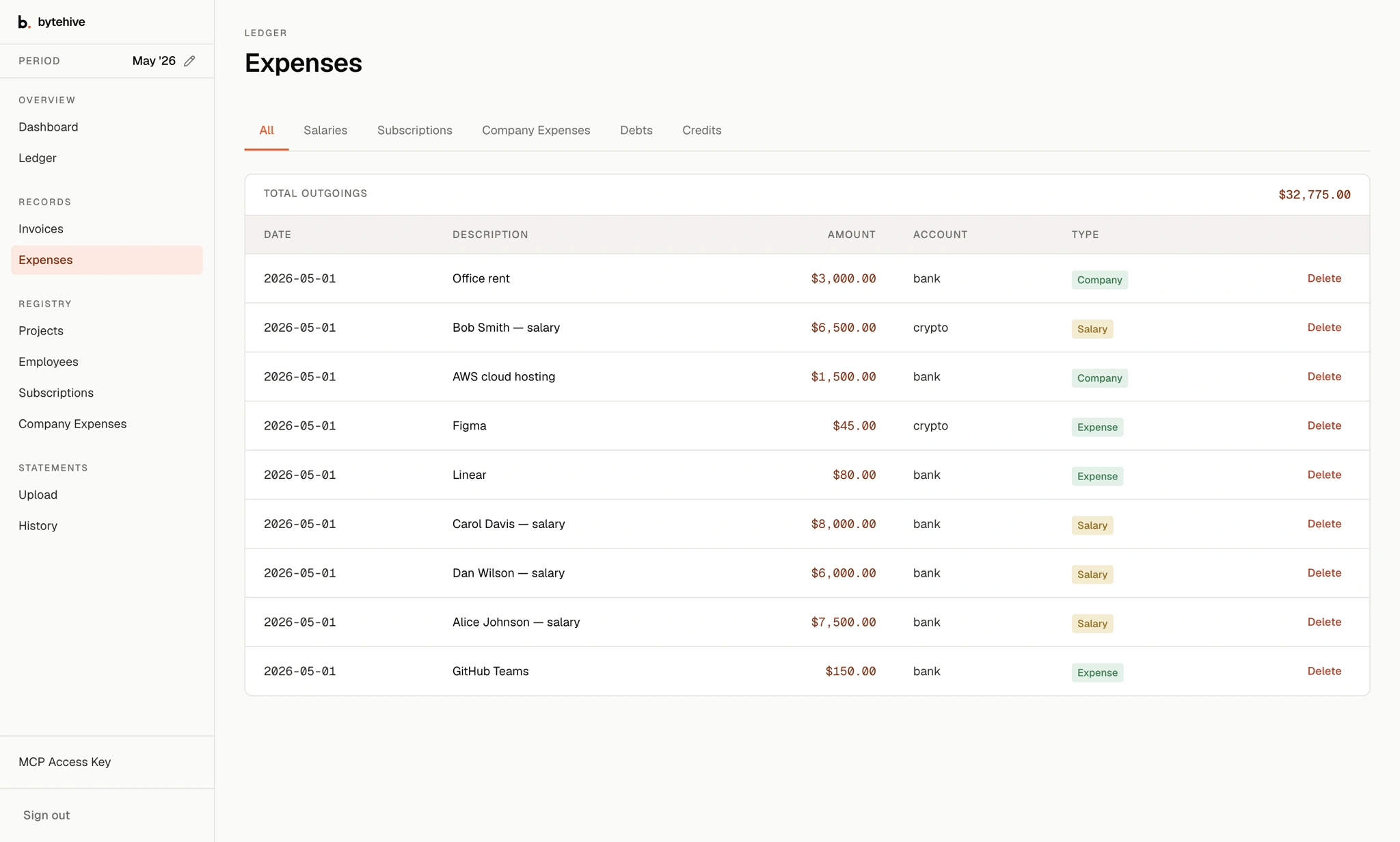
The expenses register groups outgoings by type (salaries, subscriptions, company costs, debts and credits) with account, amount and total for the period.
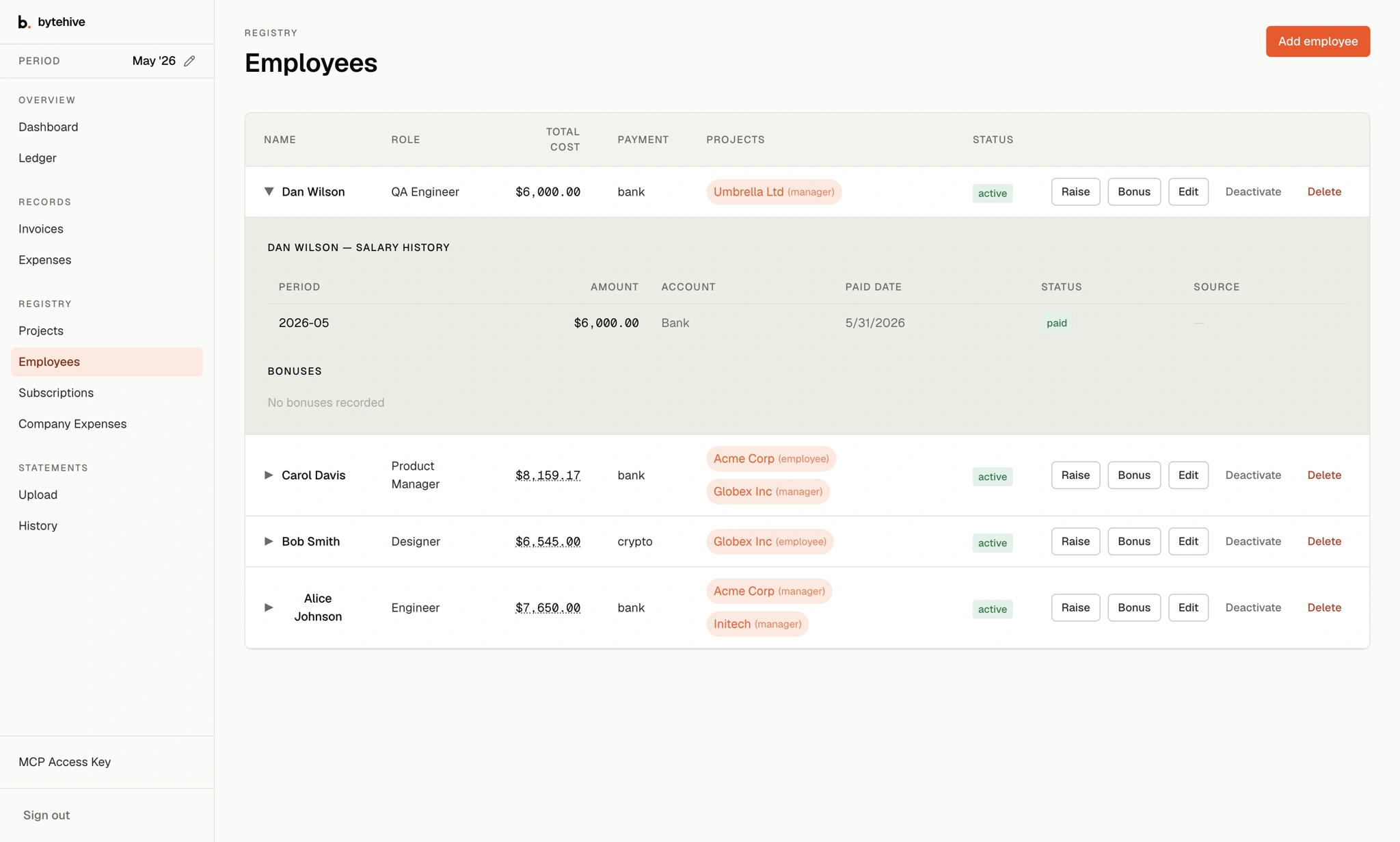
The employees registry holds roles, total cost, payment method and project allocation, with salary history, bonuses and raise actions per person.
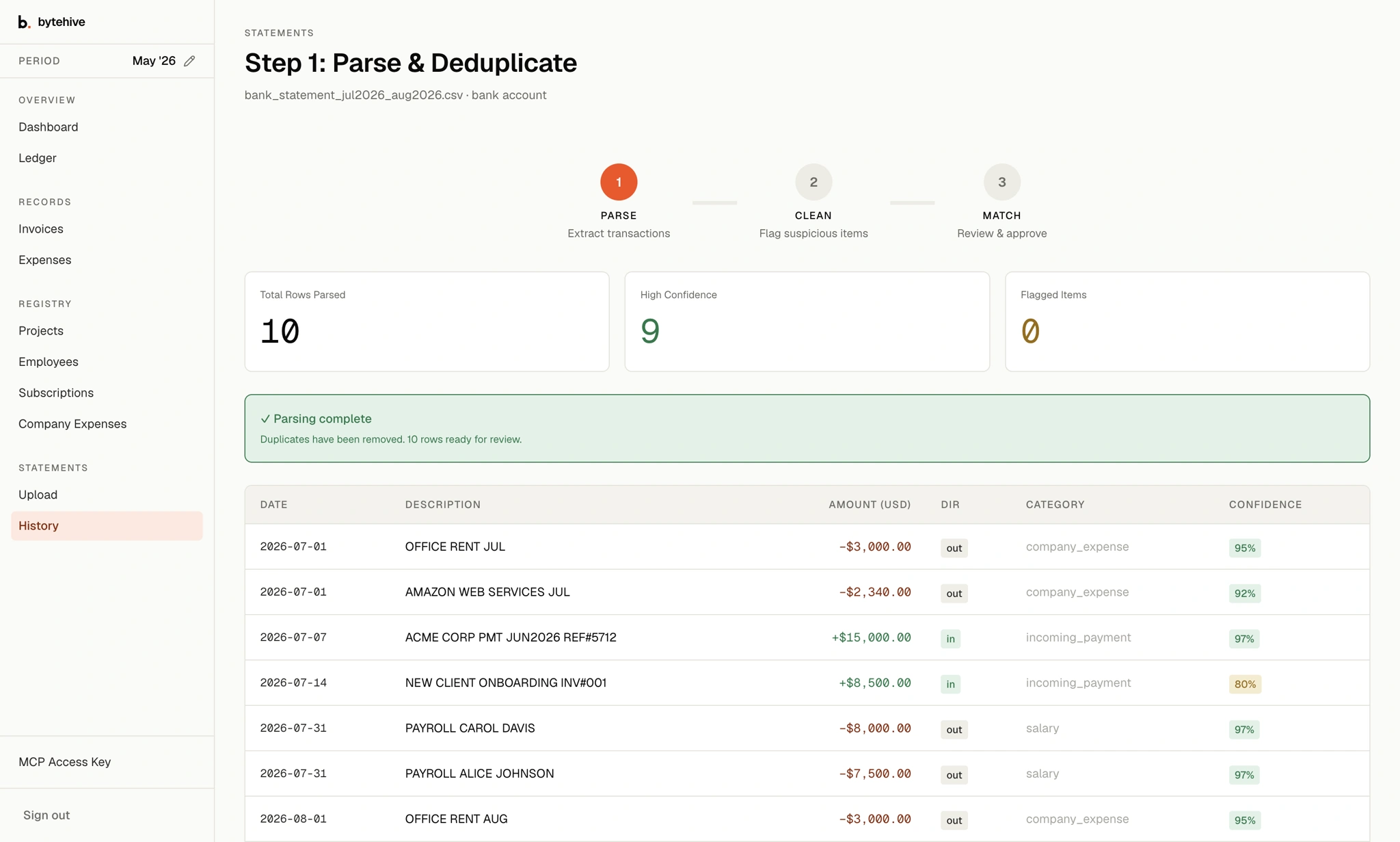
Statement upload parsing: a bank CSV is parsed and deduplicated, with confidence scores and categories assigned before review.
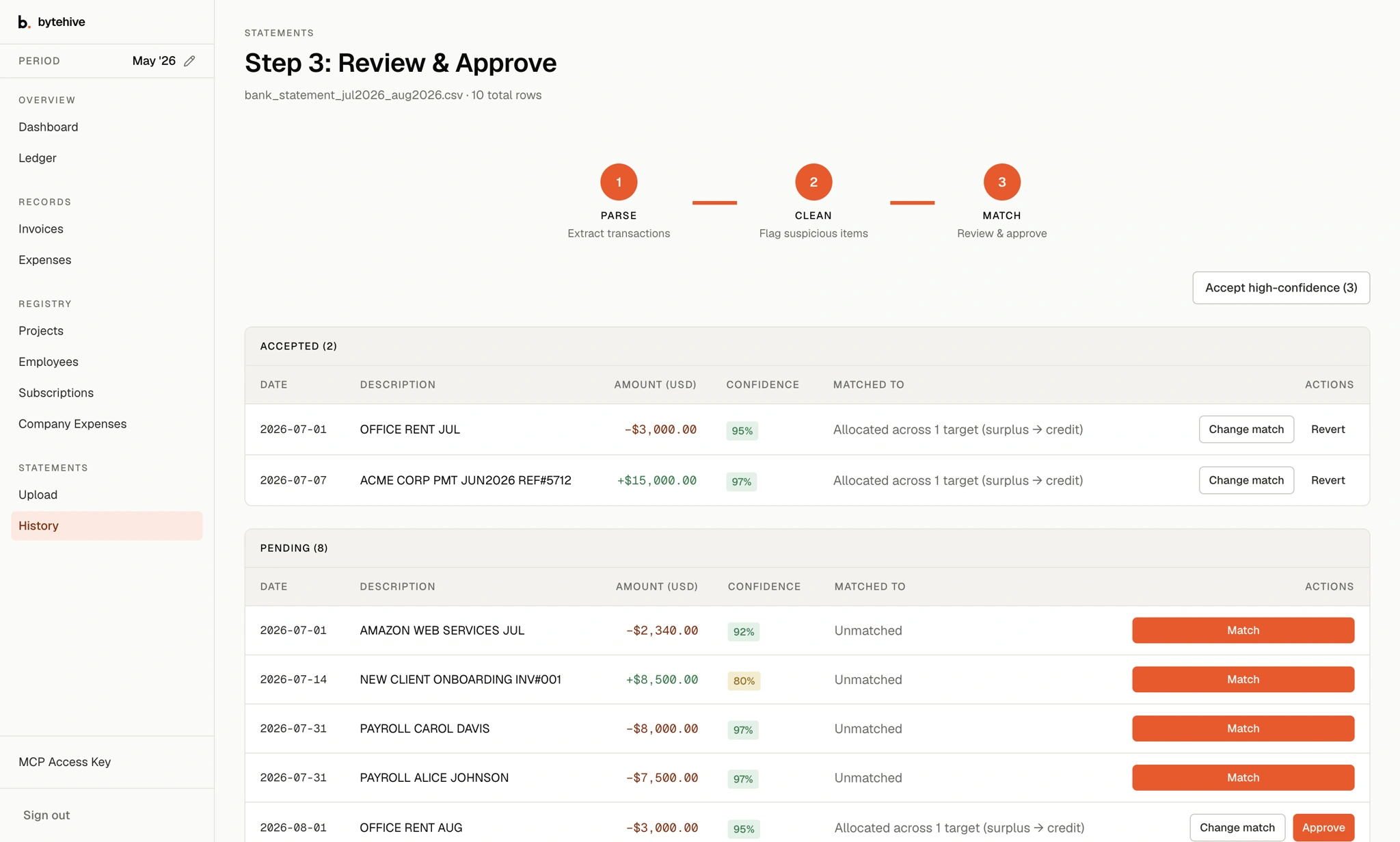
Statement upload matching: parsed rows are matched to invoices, salaries and expenses, with high-confidence matches accepted and the rest reviewed manually.
- Agency operations and business finance
- Internal product, designed and built for our own operations
- FastAPI, PostgreSQL and SQLAlchemy with a Next.js and Tailwind frontend, a TypeScript client generated from OpenAPI, in a pnpm monorepo
We wanted a clearer picture of how the business was performing financially. The numbers lived in too many places, incoming and outgoing payments, salaries, invoices, recurring expenses, subscriptions and the rest of the operational costs, and none of the generic tools fitted the way we actually run.
So we built one place for all of it. HiveLedger brings those streams together, and a dashboard gives us the monthly profitability number and shows where we can improve. Because it is built around our own processes, we can shape it to what we need, keep sensitive financial data in a system we control, and evolve it as the business changes.
That flexibility is also what we value when we build for clients. The best tools are rarely one-size-fits-all. They work because they fit the people, processes and business behind them. Building this for ourselves is a reminder of what that feels like from the client's side.
One system holding the operational money picture, a dashboard of monthly profitability, and a product we can keep changing as the agency does. No profitability figure is quoted; the claim is the work.