Fundee: A crowdfunding marketplace where backers share the upside
Fundee is a fundraising marketplace where anyone can put a project up and a visitor who likes what they read can back it in seconds. It arrived as one person with a backend he had written himself and no product around it, and it left as a finished platform: feed, project pages, creator analytics, a live transaction ledger and a social layer. Simple was the requirement rather than the compromise, because a donation flow that makes someone pause is a donation that does not happen.
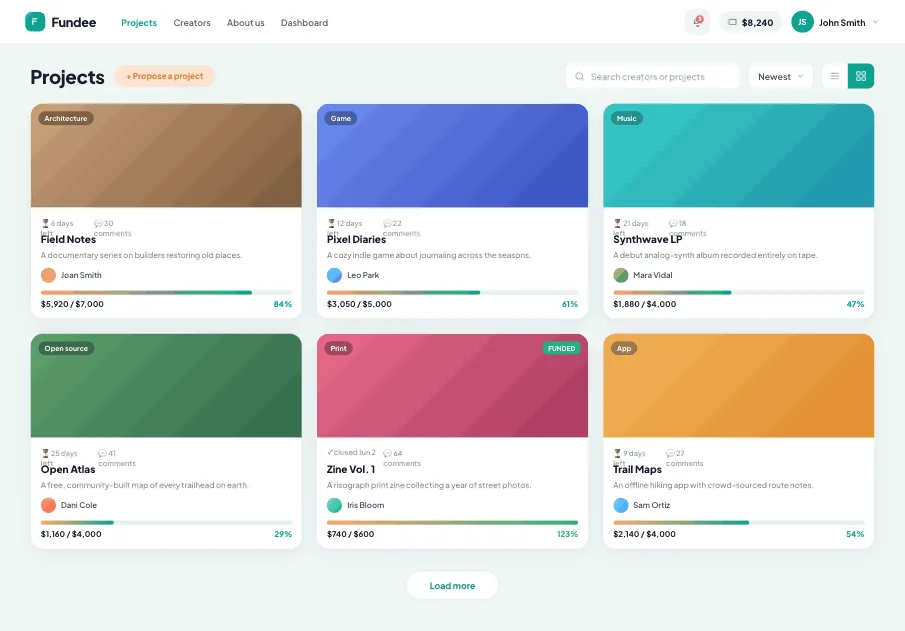
Backers browse live campaigns with funding progress, backer counts and category filters across games, film, music and open source.
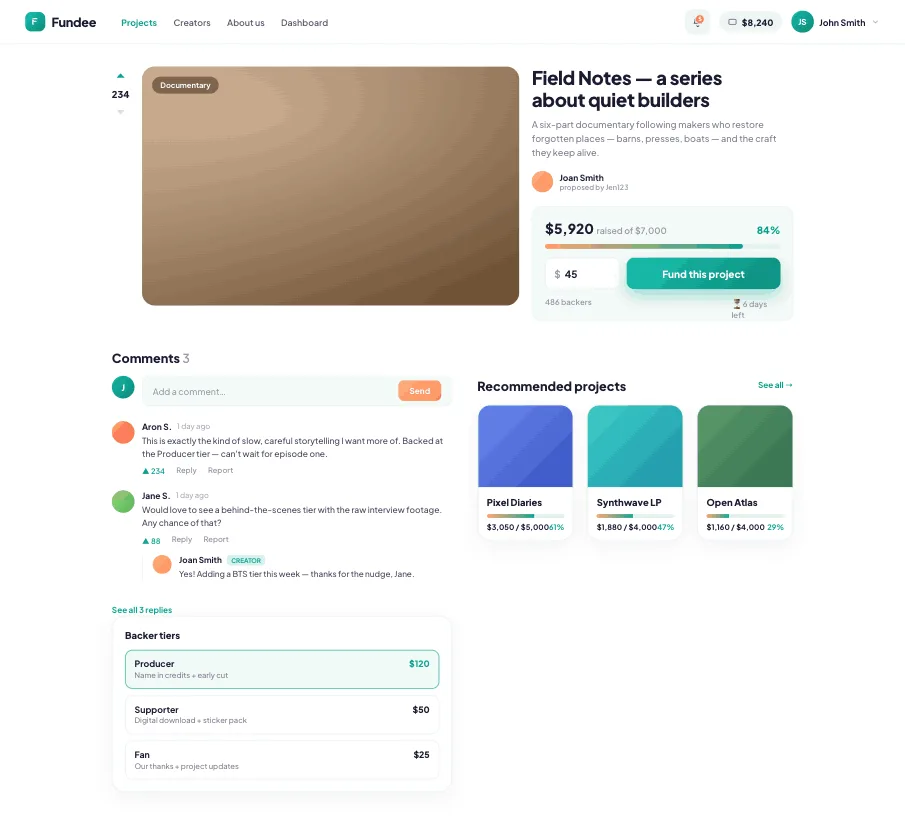
Each project page shows the pitch, backer tiers, comments and upvotes, with a pledge flow that completes in seconds.
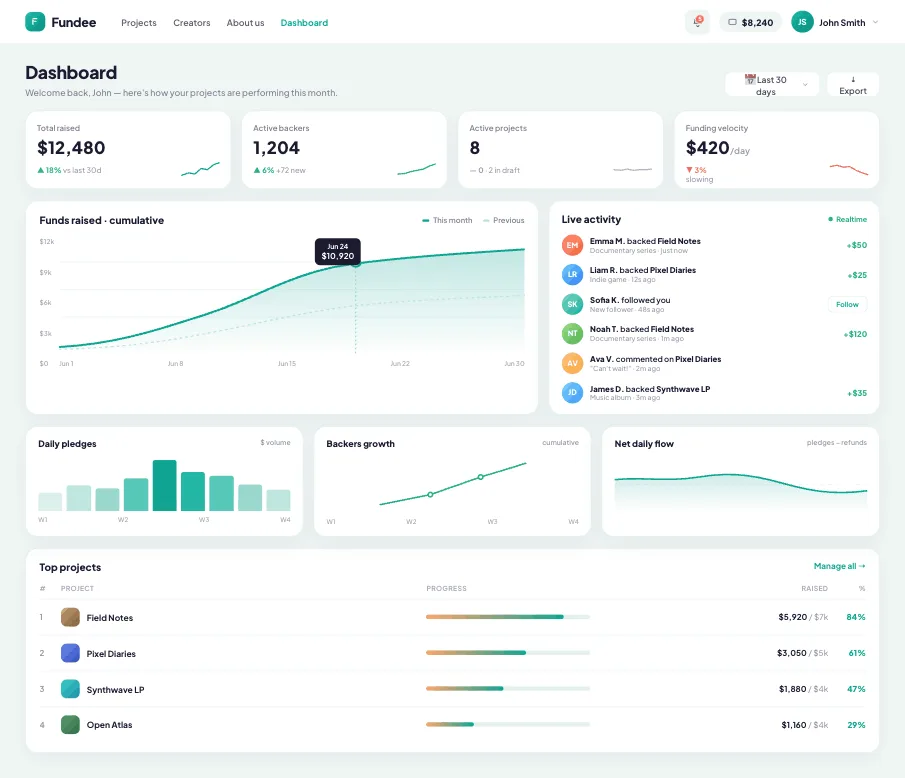
Creators see cumulative raise, daily pledges, backer growth and net flow across every live campaign from one home screen.
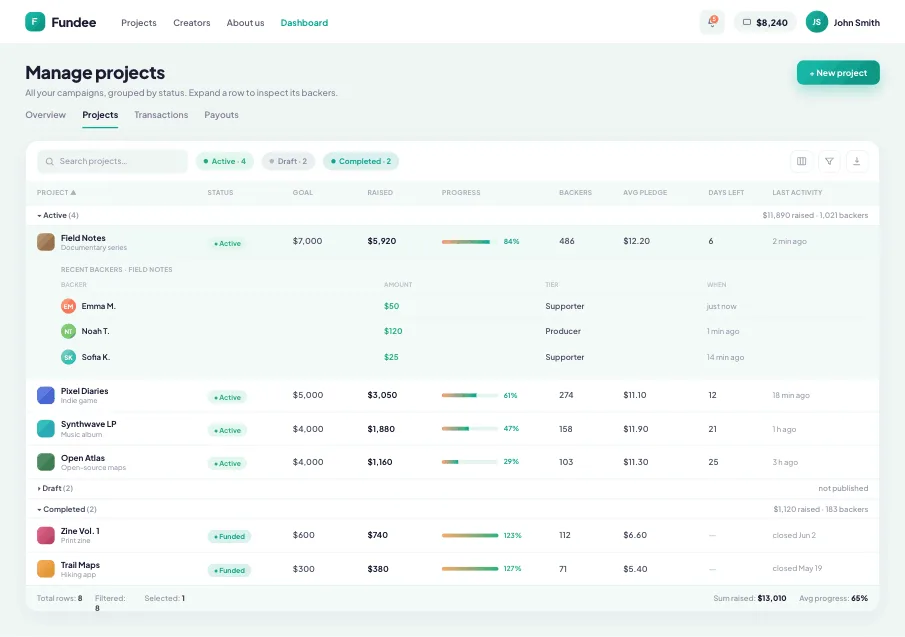
A grouped project table lists each campaign with funding status, backer drill-downs and quick links to edit tiers and updates.
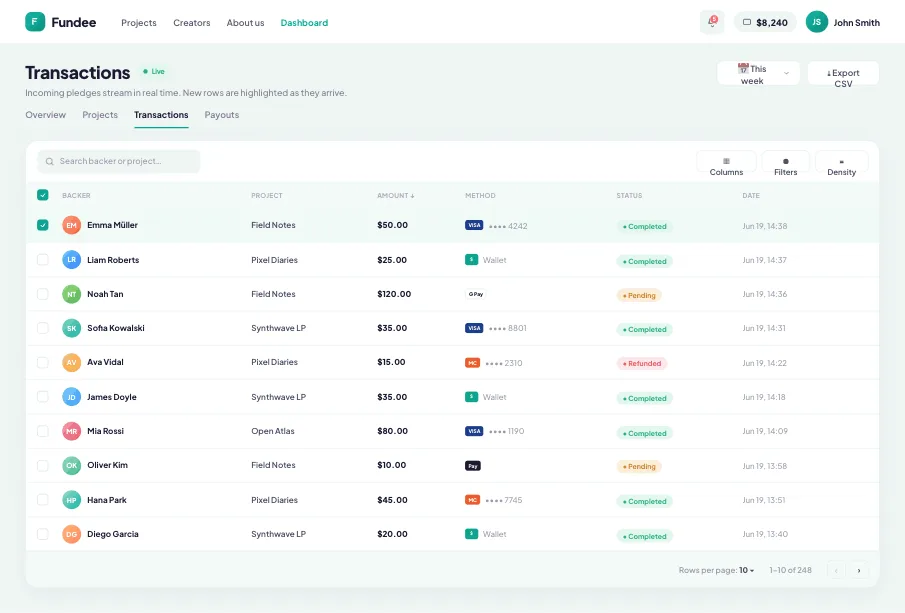
A live ledger records pledges, payouts and refunds across payment methods, so a creator can reconcile what has moved.
- Crowdfunding and consumer marketplaces
- End to end product build for a single founder, planning through delivery, plus specification work on his backend
- React with Redux and styled-components in TypeScript, with Stripe underneath the payment path
Fundee started as one founder with an idea: anyone can put a project up, it lands in a shared feed, and a visitor who likes what they read can put five dollars behind it without stopping to think. Being a founder rather than a company shaped the engagement more than the product did, because there was no product team to lean on and no budget to absorb a wrong turn. So we took the whole thing, planning and execution, and we specified his backend for him without writing a line of it. That is the plain version of what a small client actually needs, which is to hand over a direction and get a finished product back for the number that was agreed.
We built the feed, the project pages and the creation flow first, then the payment path, where the design decision was the wallet. A user tops it up once, so backing a project afterwards is a number and a button rather than a checkout, with Stripe underneath it, integrated and tested against the states that actually go wrong in payments rather than the happy path. On top of that sits the part that makes Fundee different from a donation page: backers share in a creator's upside instead of pre-buying a product, which turns a checkout into a ledger plus a community. So the build also carried funding analytics on the creator side, a transaction ledger updating live across payment methods, and a social layer of following, comments and a community feed that gives people a reason to come back between pledges.
All of it was hand-built, before AI assistance was part of how anyone worked: a payments product taken from nothing to finished on documentation and troubleshooting alone.
A complete product, delivered end to end on a single-founder budget: the marketplace, the payment path, the creator analytics and the social layer, plus the backend specification the founder built against. The engagement ended there, complete rather than abandoned, and no second stage followed.
Nothing was published or confirmed by the client on usage or funds raised, so no figure is quoted here.