Fragma: from no blockchain experience to a production ownership platform
The founders knew investments and real assets, and had never worked with blockchain in their lives. Between their vision and a working product sat a field they did not know: cryptography, smart contracts, and the regulation that applies the moment an ownership right becomes a digital asset. That gap is where ventures like this usually stop. bytehive walked them across it, prototype to production.
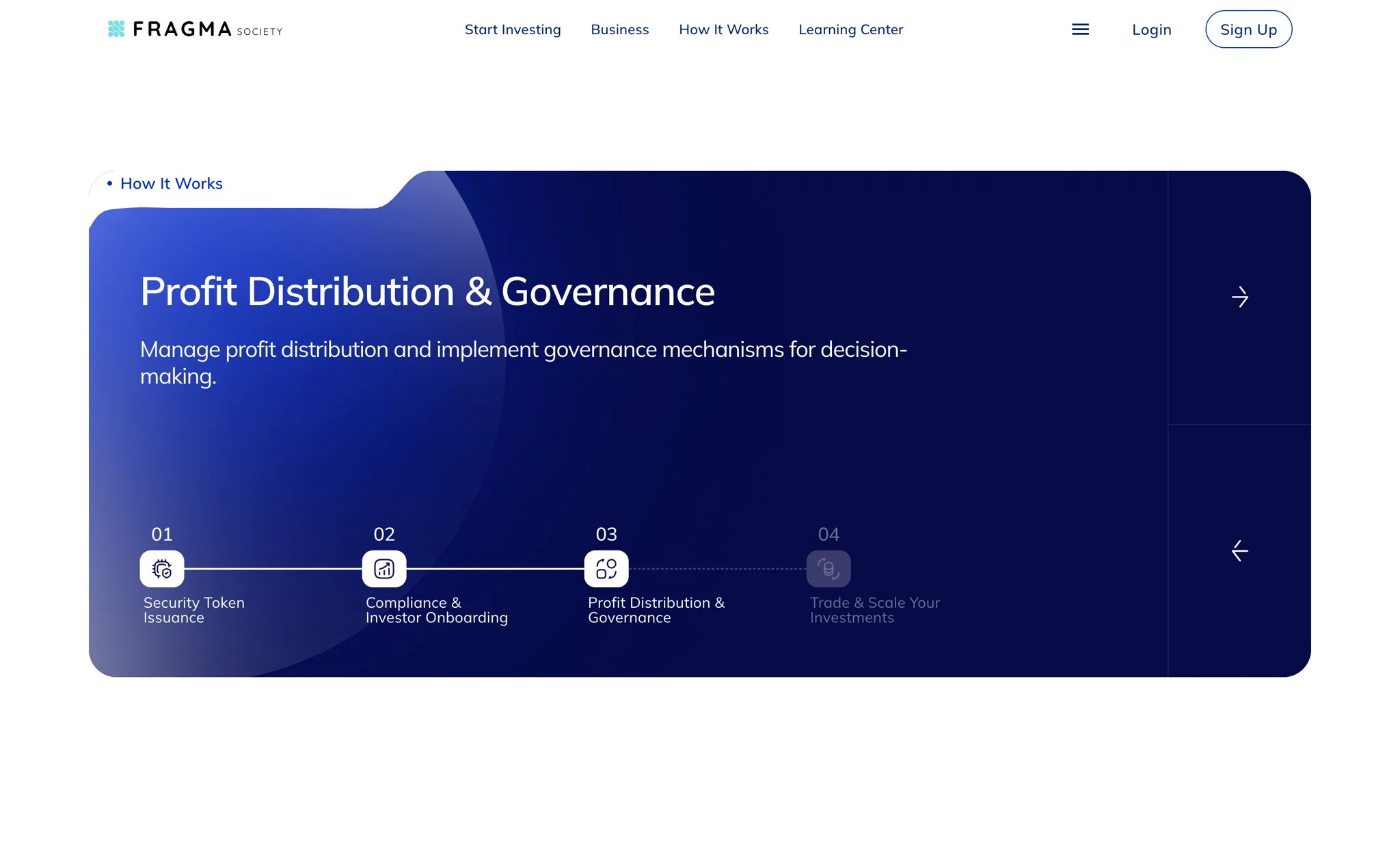
Four stages explain the platform: security-token issuance, compliance and onboarding, profit distribution and governance, then trading and scaling.
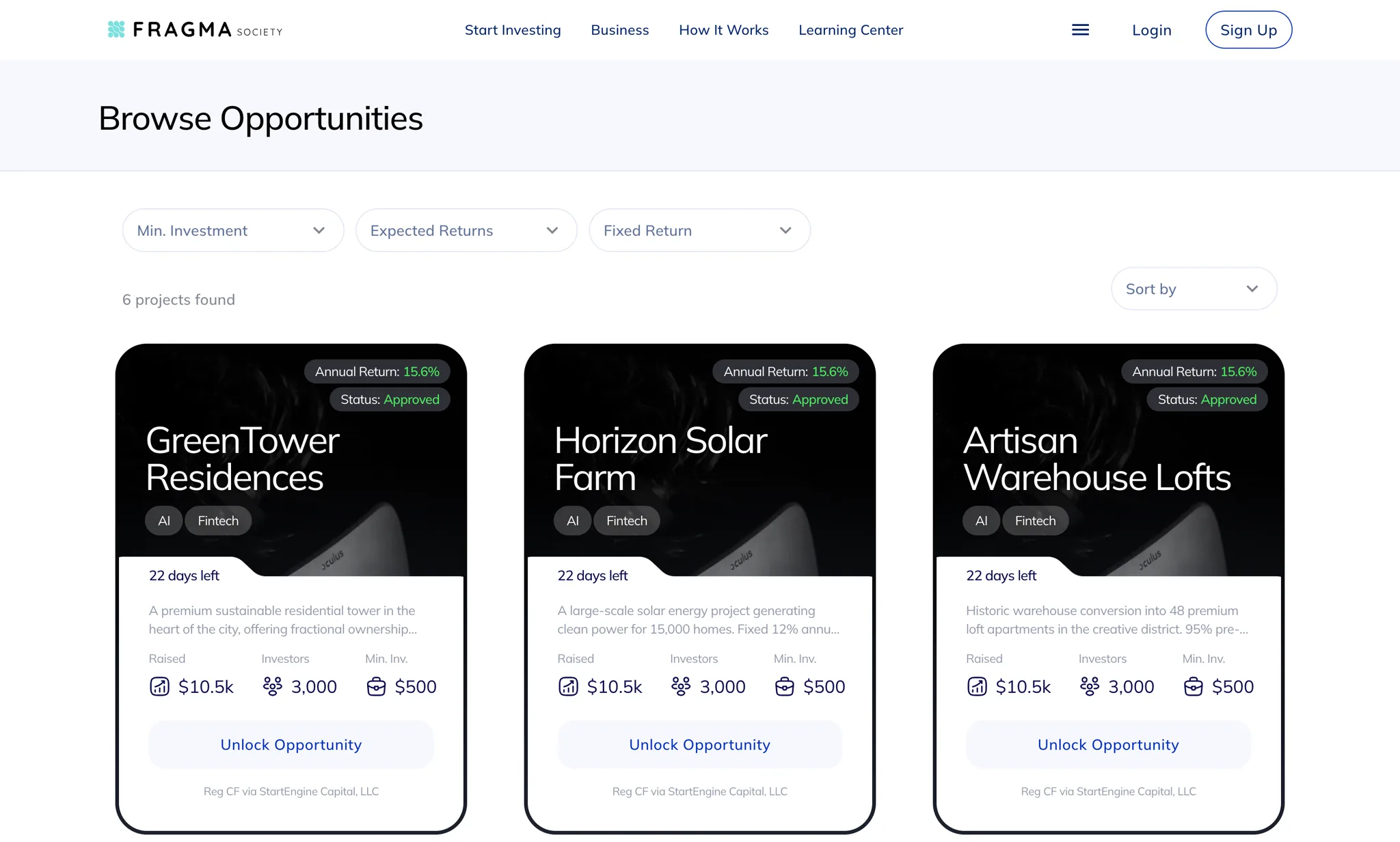
Investors browse curated tokenized assets with filters for minimum investment, expected returns and fixed-return opportunities.

Each listing presents the project, funding progress, time remaining, investment amount and estimated annual earnings.
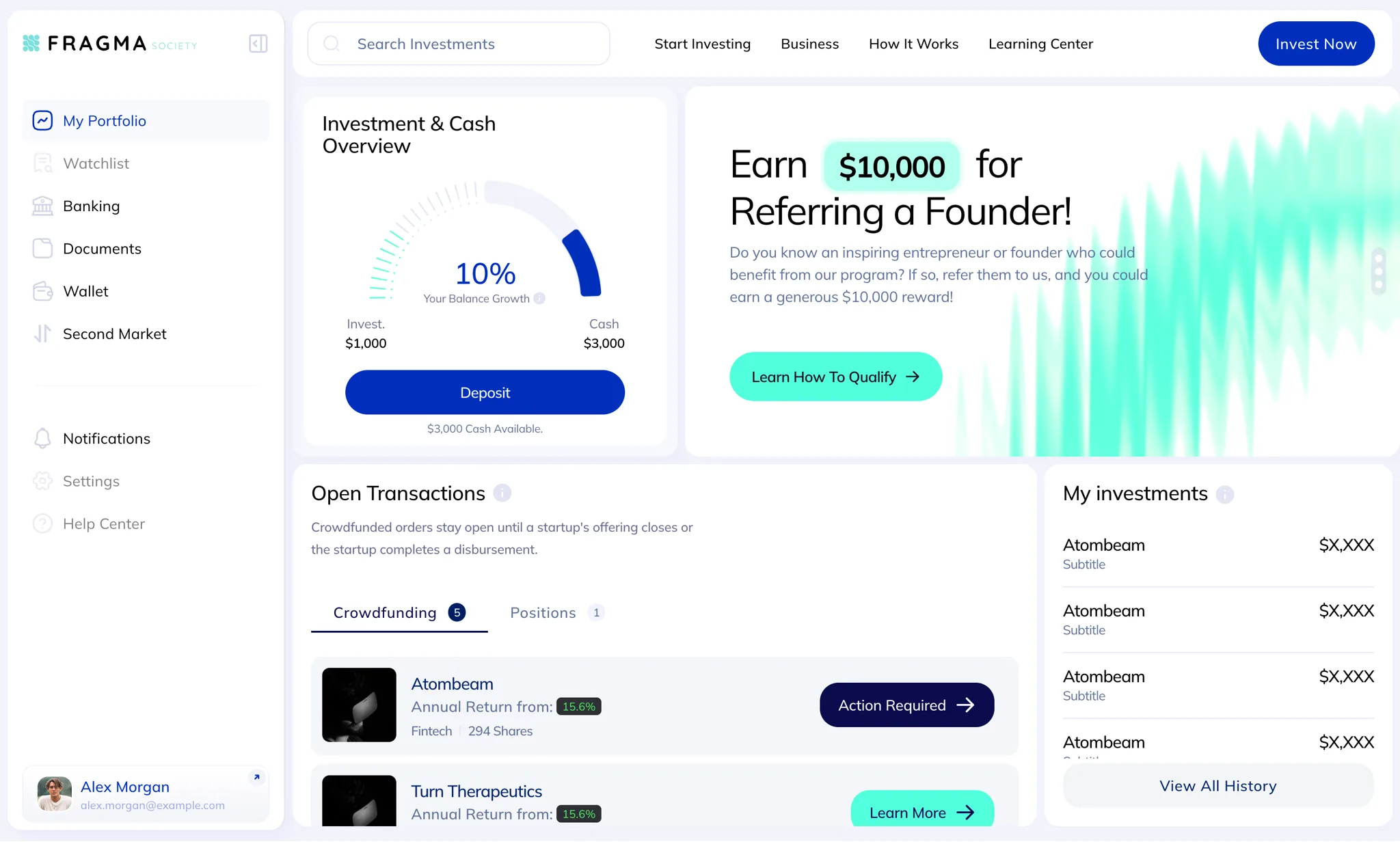
The portfolio dashboard totals holdings, open transactions and income across every tokenized position an investor owns.
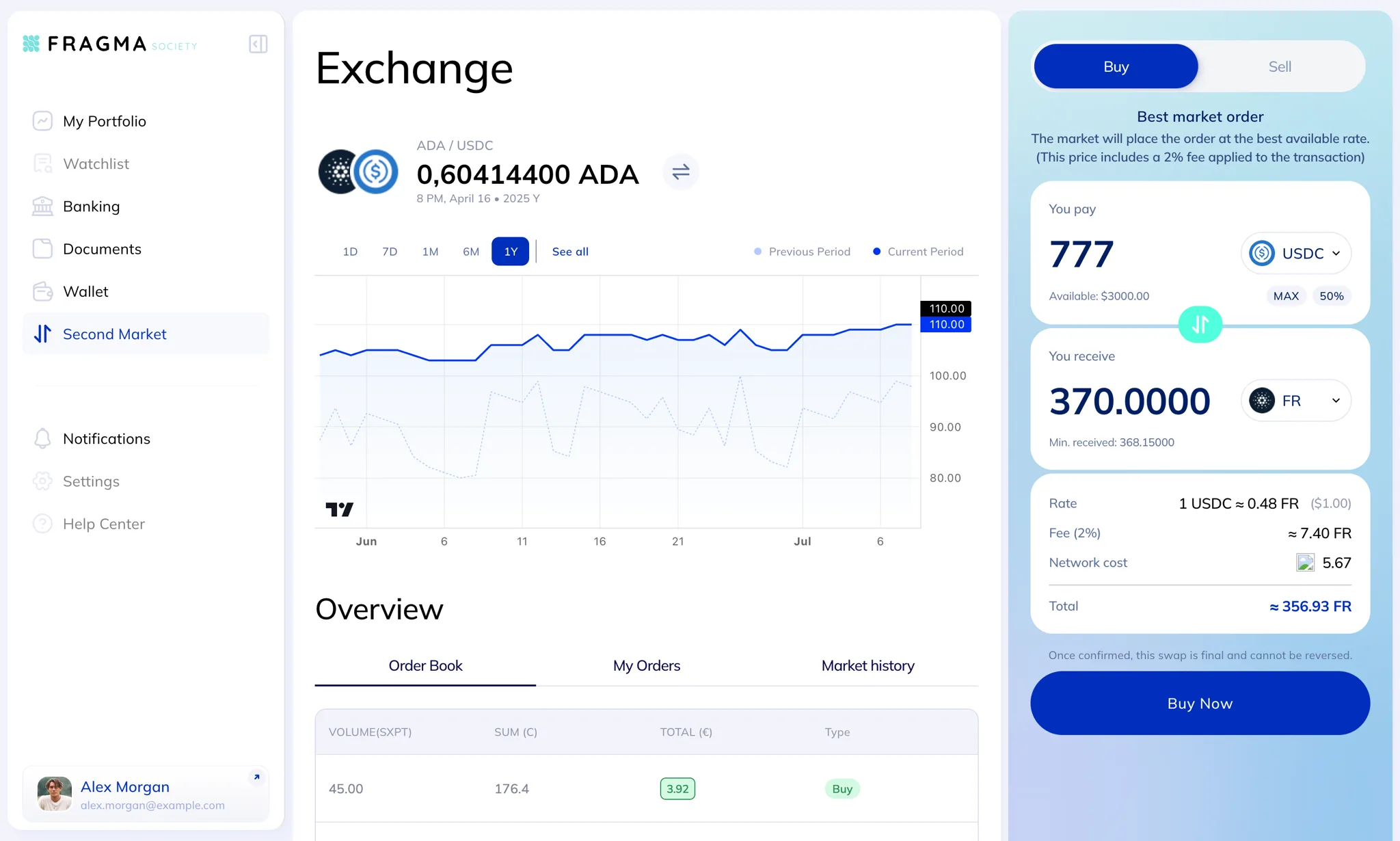
A second market lets investors trade tokenized positions with live price charts and an order book for each listed asset.
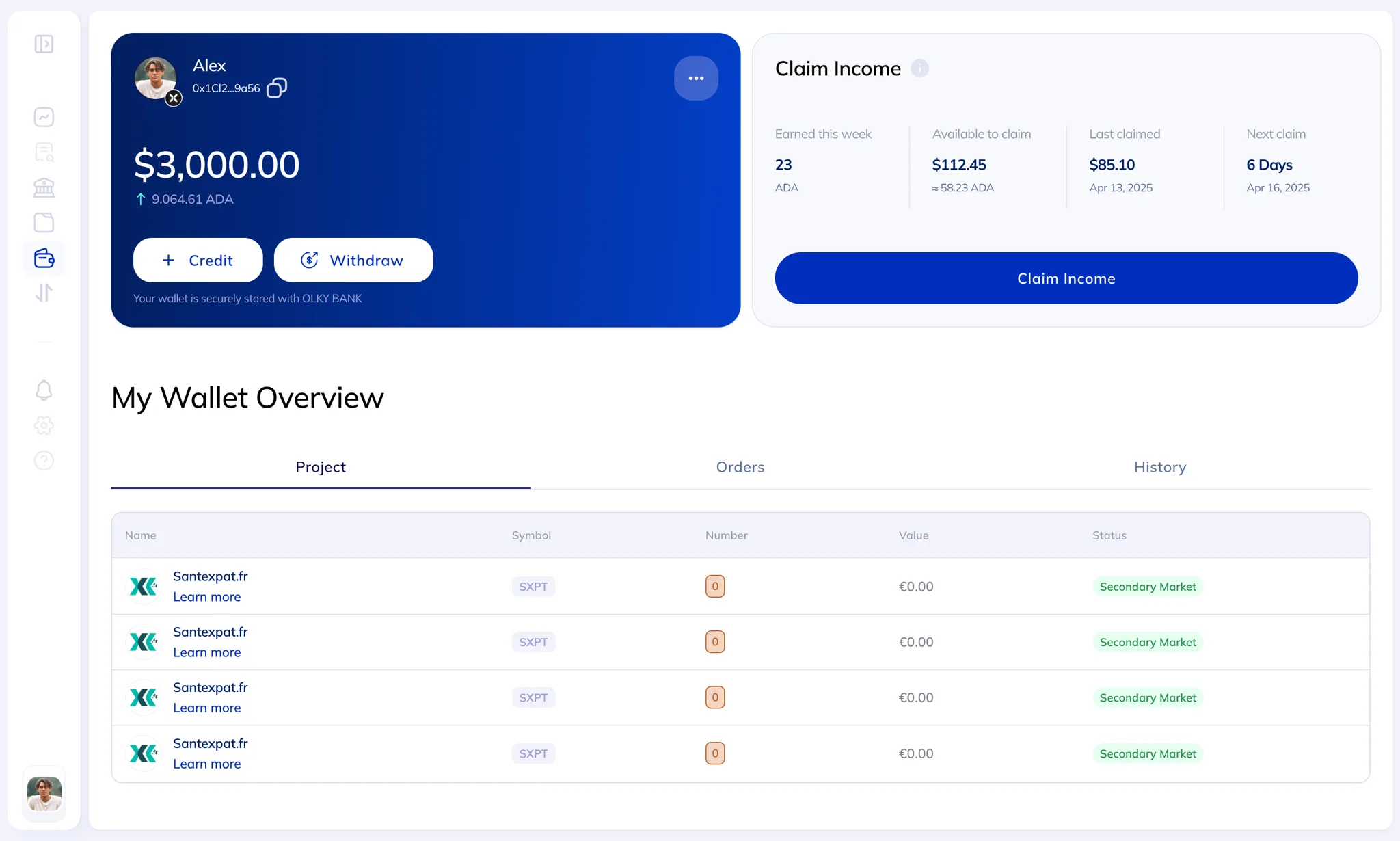
The wallet shows balance, credit and withdraw actions, claimable income and tokenized project holdings in one account view.
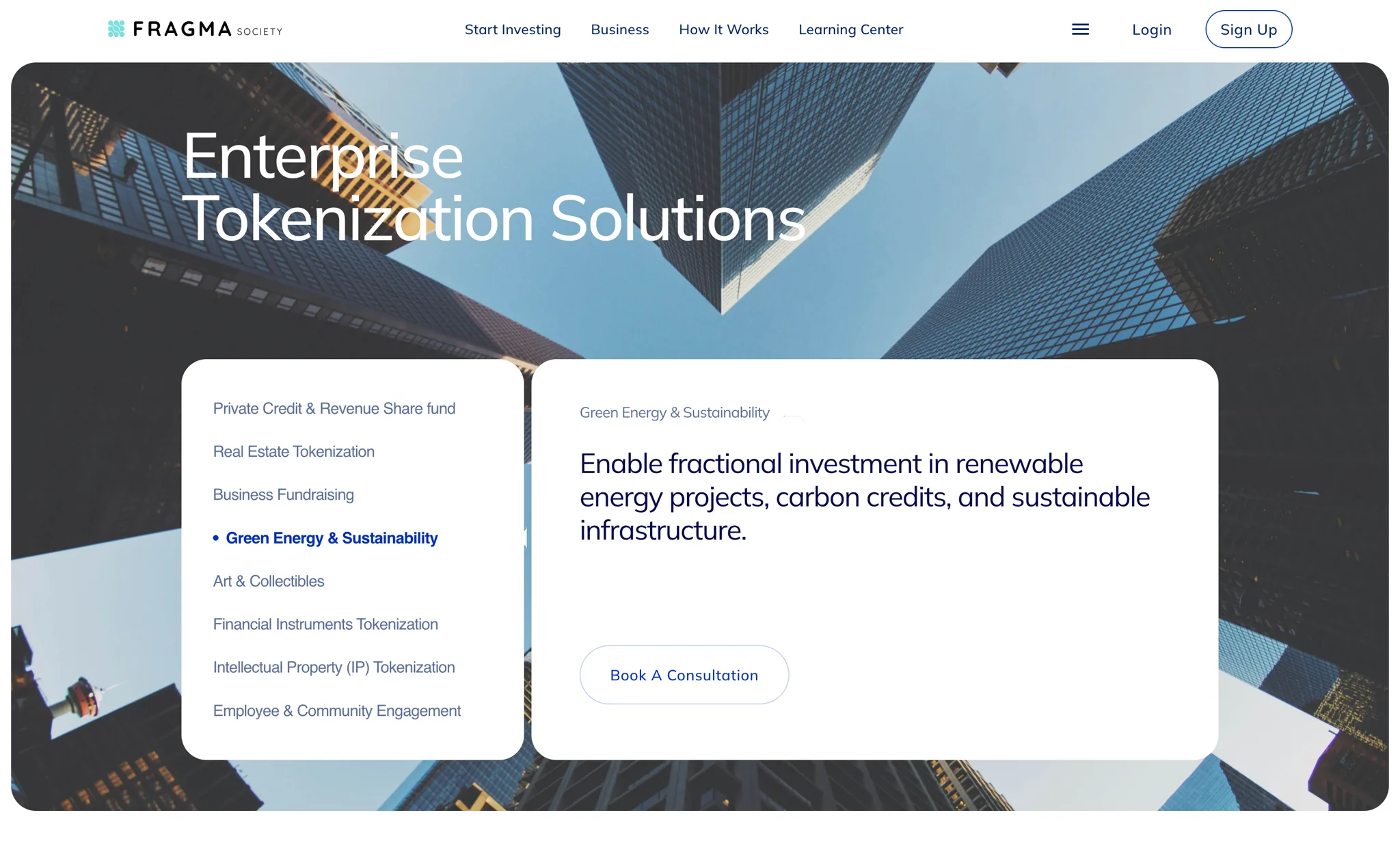
The enterprise page presents tokenization uses across private credit, real estate, renewable energy, art, financial instruments and IP.
- Fintech, real-world asset tokenization and ownership operations
- The full product lifecycle, AI prototype to MVP to production, with the compliance architecture as our own scope
- React and TypeScript on Vite, with a managed authentication and identity-verification layer behind the onboarding, document and e-signature flows
We started by making the idea touchable. An AI-built interactive prototype came before any production code, so the founders could hold the product, test the assumptions that mattered while changing them was still free, and put a real thing in front of stakeholders instead of a description of one.
Then the marketplace, and the number that defined it. The entry ticket was fifty euros, which is the whole thesis rather than a pricing detail: at fifty euros the compliance problem arrives before the product problem does, because identity checks, e-signature, issuer vetting and a tradable secondary market all have to work at a cost per investor that a fifty-euro ticket can carry. On one side an owner tokenized a physical asset, an apartment, a hotel, a business, and sold it whole or in part. On the other, ordinary investors bought a slice of things they normally cannot reach.
The compliance work is the part we own, and for this client it was the wall. Identity verification for individual investors and for companies, an ownership structure that holds up legally under special-purpose vehicles and funds, a multi-step issuer vetting pipeline, e-signature, and a platform built to operate inside a regulated perimeter. On that work we were the product's technical architect and, in part, its regulatory one.
Then the product outgrew the marketplace, and we repositioned it rather than rebuilt it. Fragma today is ownership-operations infrastructure for businesses, funds and special-purpose vehicles, closer to an operating system for the cap table and for distributing income, with tokenization as one instrument inside it rather than the point of it. That opened a more conservative, institutional audience: funds, property operators, owners of hotel and media assets, who care about transparency and compliance far more than about trading tokens. It was only possible because the same team had carried the product from the first prototype, so the technical vision never had to be handed over.
A team with no blockchain experience got a production ownership platform, and the compliance architecture that lets it operate where the regulated money is.
The relationship is the result worth stating: one team from the first prototype through the MVP to the production product, and then through a change in what the product is for.
The client's own regulatory positioning is theirs to make and we never repeat it as ours. What is ours is the architecture underneath it. The contracts are not: bytehive integrates against on-chain protocols rather than authoring or auditing them.