ARGU: on-site AI video surveillance for industrial operations
ARGU sells AI video surveillance to industrial sites, where cameras run continuously and nobody can realistically watch all of them. We built the interface operators actually work through, from live view and investigation to alerting, subject databases and the configuration layer underneath. The footage can never leave the customer's premises, so everything had to run on machines installed on site and reachable only over VPN.
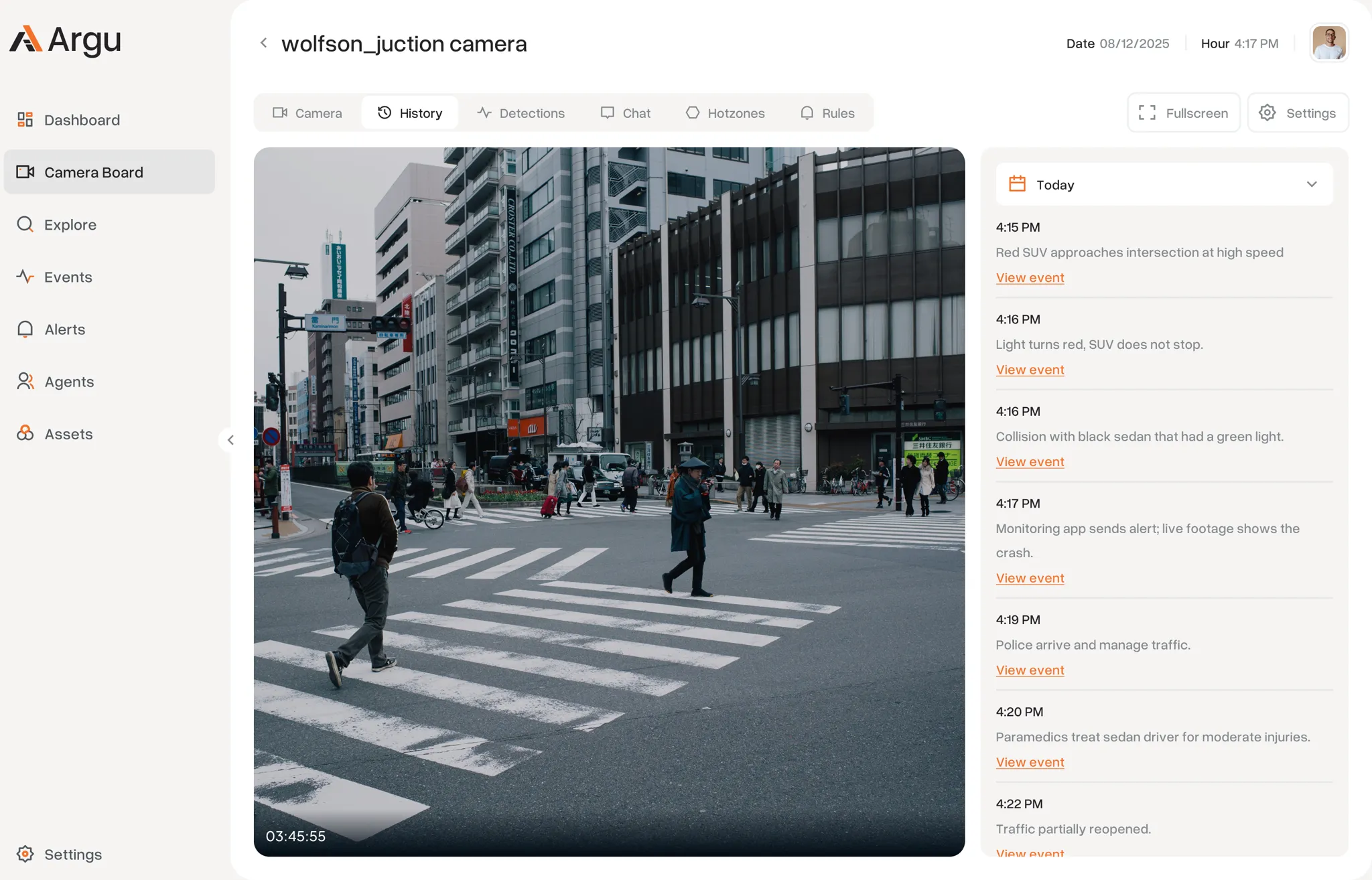
The camera board opens a single feed beside its event history, so an operator can read what happened at the junction minute by minute.
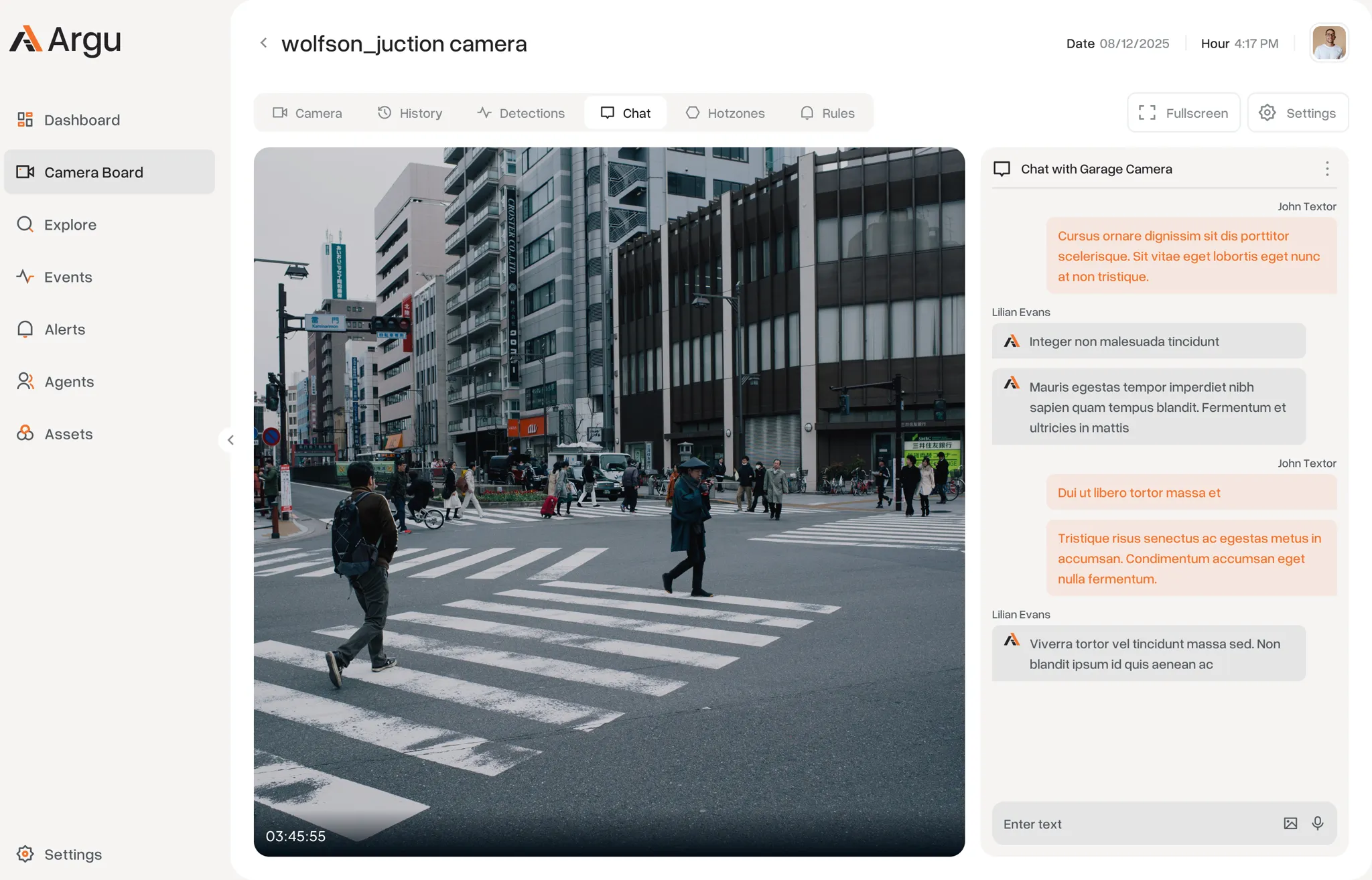
Chat runs against the feed itself, so an operator can ask what a camera saw instead of scrubbing back through the footage.
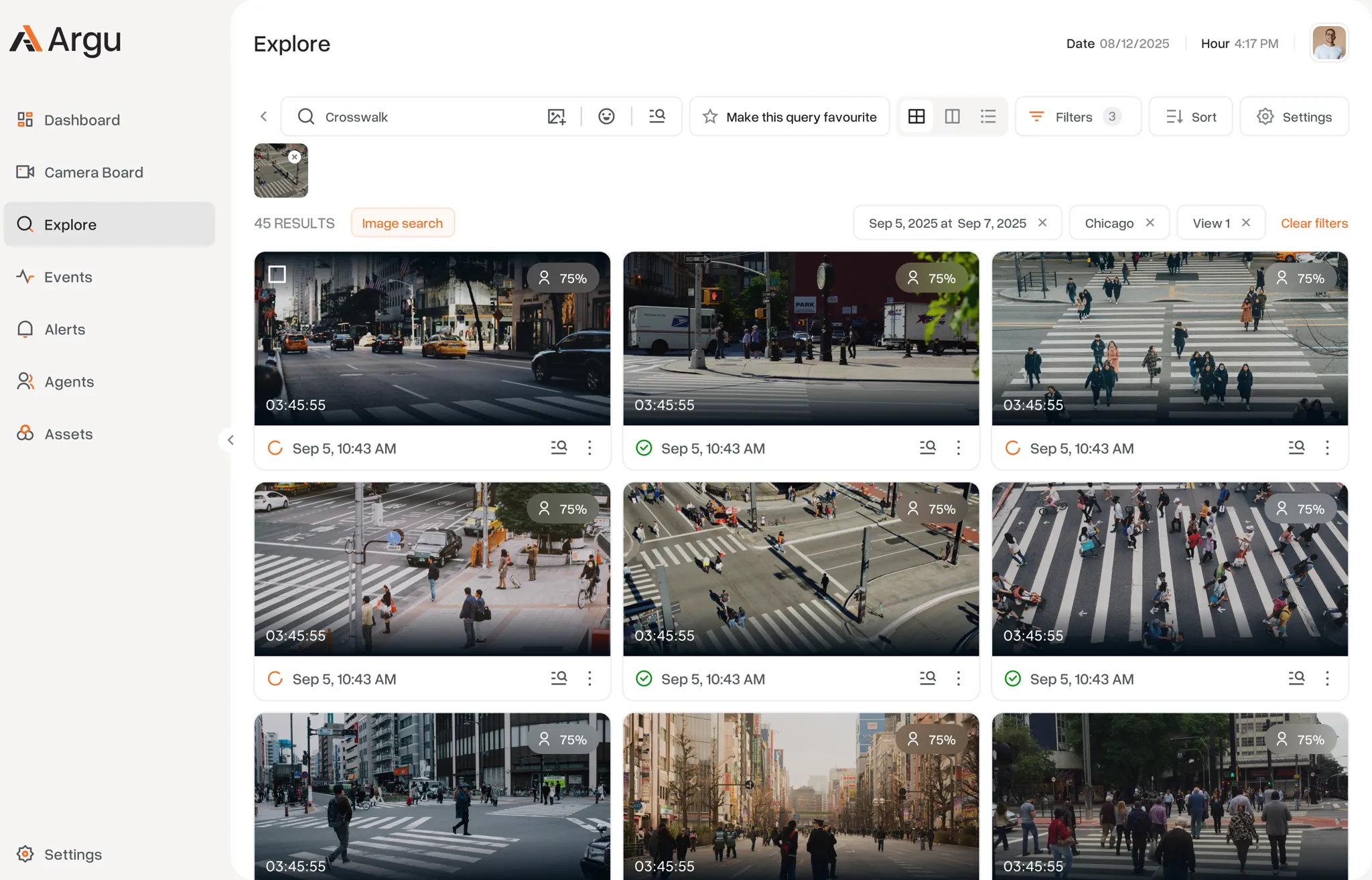
Explore searches every camera by text or by image, with filters for date, site and view, and returns matching frames as a grid.
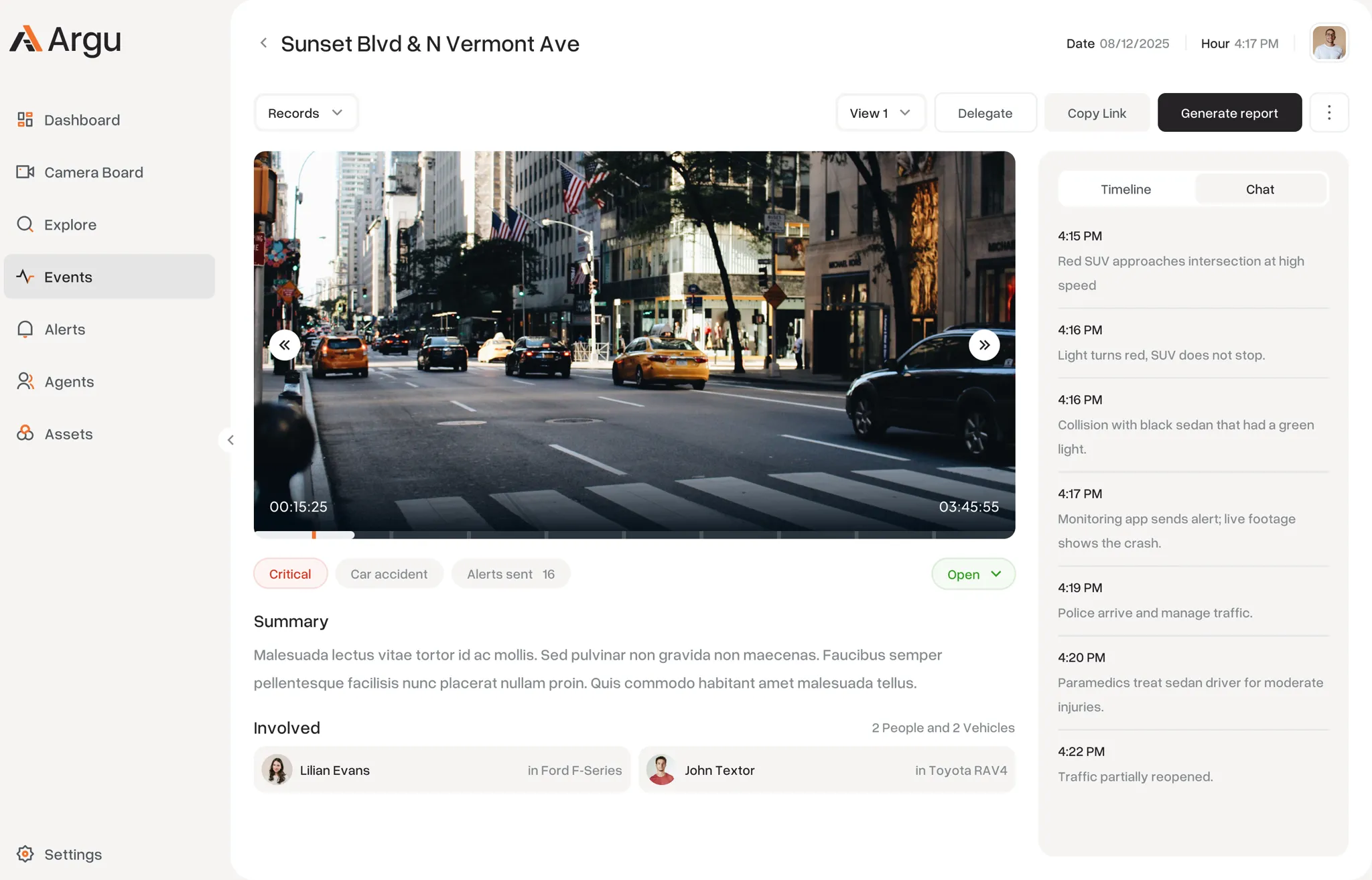
An event opens to the footage, a timestamped timeline, a written summary, and the people and vehicles involved.
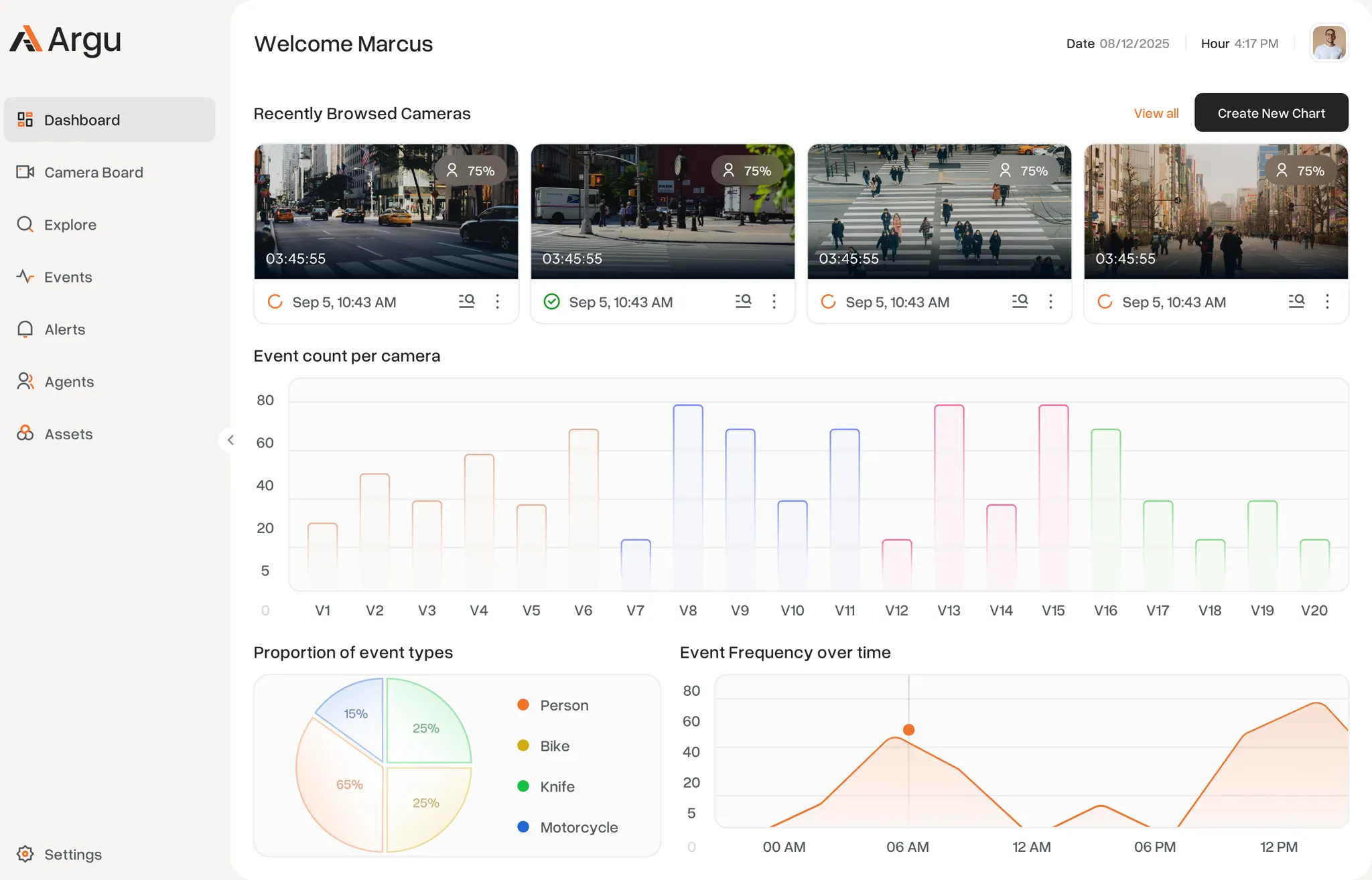
The dashboard collects recently browsed cameras with event counts, event types and frequency over time across the whole deployment.
- Industrial security and video surveillance
- Embedded frontend team working inside the client's own sprints, alongside their engineering, QA and security groups
- React and TypeScript on Vite for the operator dashboard, built over an open-source video engine, with a vision-language model layer behind the alerting
ARGU sells video surveillance to industrial sites: factories, ports, the kind of operation where cameras run continuously and somebody is nominally supposed to be watching all of them. The product watches instead and raises a hand when something is wrong, whether that is a fire in a workshop, a vehicle where none should be, or a person whose movement departs from the normal pattern. Two constraints shaped everything: the footage cannot leave the site, so there is no cloud to lean on, and continuous video from many cameras is a genuinely heavy workload, running on powerful machines installed at the customer's premises and reachable only over VPN.
We built the surface an operator works through: live view, review and investigation, an alerting system that pushes into the channels people already watch, subject databases for faces and licence plates, and the configuration layer underneath, which decides which cameras run which detection and what is retained for how long. We were one team among several, working alongside the client's own backend engineers, QA and security group, which meant daily calls and constant back-and-forth rather than a handover.
What made it demanding was the pace. ARGU was still selling the product in person, so a requirement was often a named prospect on a named date: a poultry farm visit two days out, so bird detection had to work by then. We had to take newly trained models into a product that stayed stable in production, at that speed, repeatedly. Design was the other contribution and it was ours to propose, since the interface had grown past what a new user could navigate, with too many filters and no obvious entry point. We reworked it, pitched the rework, and the client shipped it across several pages of the product.
The system runs fully on site with no cloud dependency, which is the entire point for the operations it serves. The interface rework shipped across several pages of the product, and the engagement closed on the client's terms once they had moved into production and no longer needed additional people.
No performance figures are published and none appear here until the client states them.